




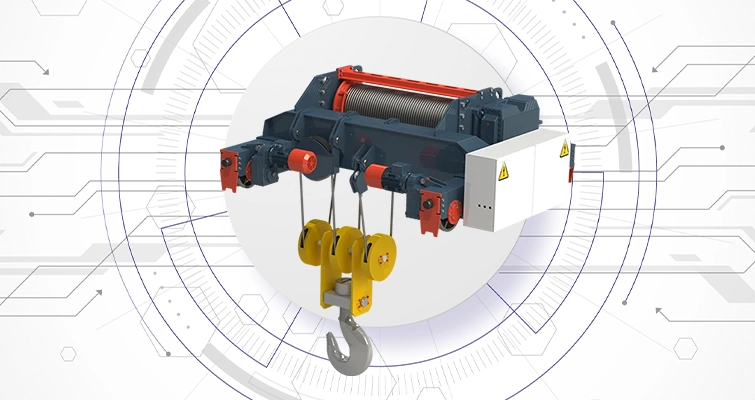
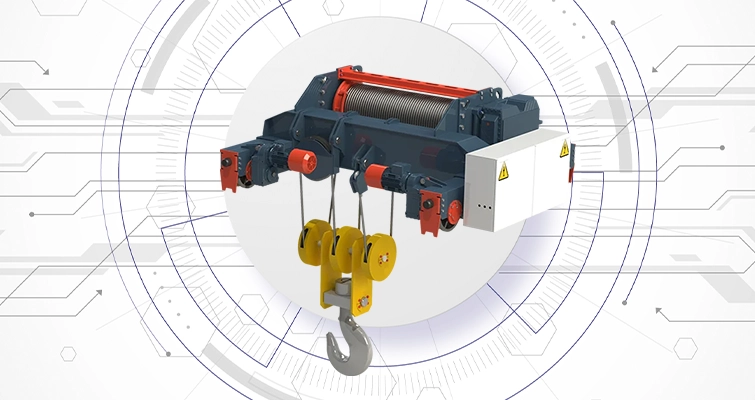
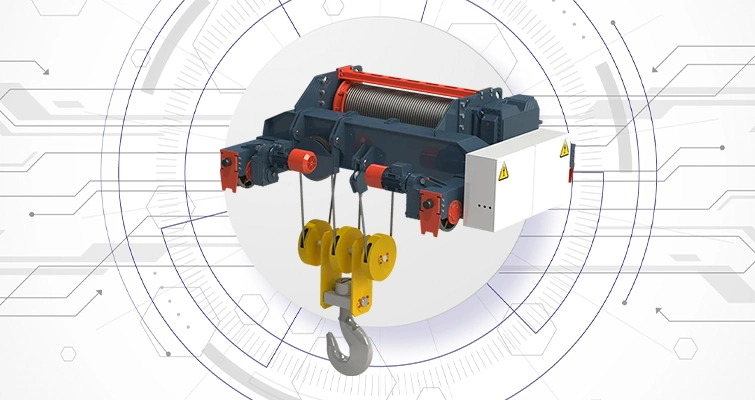
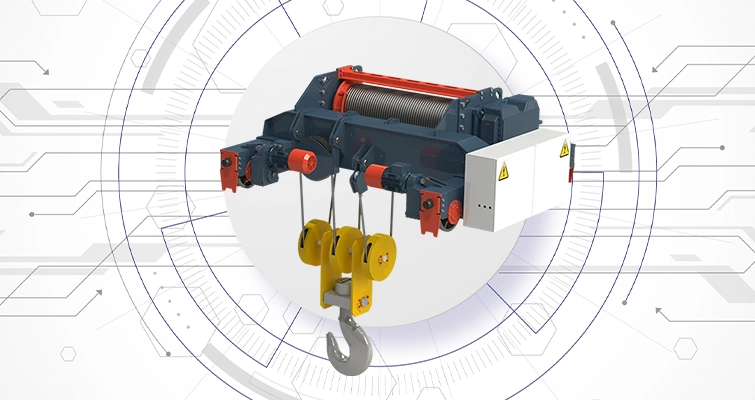
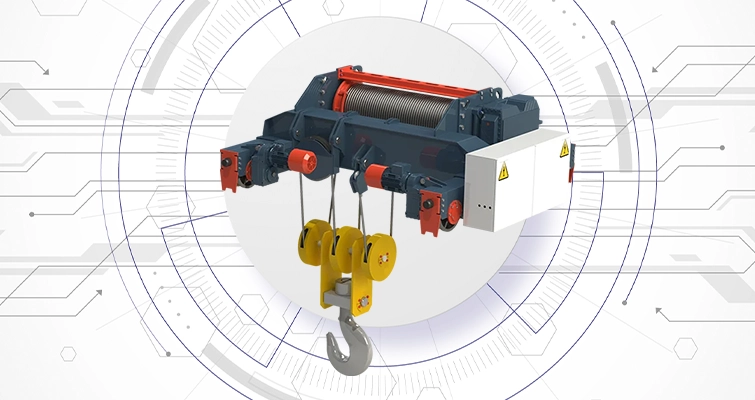
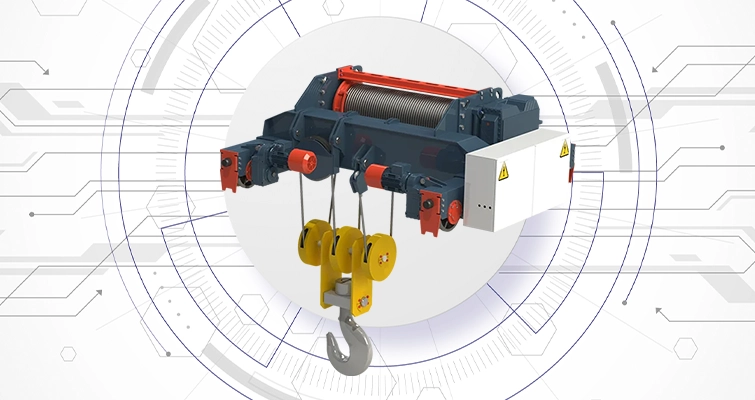
How Is Lifting Height Determined for Overhead Travelling Cranes?
How Is Lifting Height Determined for Overhead Travelling Cranes?
Calculating the Correct Lifting Height Based on Factory Height, Rail Level, Hook Approach and Crane Bridge Design
When investing in an overhead travelling crane, lifting capacity is usually the first technical specification considered. Companies often begin by stating that they need a 5-ton, 10-ton, 20-ton or higher-capacity crane.
However, selecting the correct capacity alone is not enough to ensure that the crane operates safely and efficiently within the facility.
Lifting height is one of the most important dimensions affecting the success of an overhead crane project.
When lifting height is calculated incorrectly, the crane may be able to lift the load from the floor but may not be able to raise it above machinery, production lines, storage racks or transport vehicles. Similarly, the factory may appear to have sufficient internal height, yet the usable hook height may remain lower than expected due to the bridge girder depth, hoist dimensions and upper hook approach distance.
For this reason, lifting height should not be determined solely by measuring the distance between the floor and the roof.
The following factors must be evaluated together:
- Internal building height
- Crane rail elevation
- Bridge girder depth
- Hoist dimensions
- Upper hook approach
- Height of the load
- Length of lifting accessories
- Height of machines and production lines
- Required safety clearances
- Maintenance space requirements
Based in Konya, Eser Vinç calculates lifting capacity, span and lifting height according to the actual operating conditions of each facility. The company manages technical site surveys, engineering, manufacturing, installation, testing and after-sales services as an integrated process.
This comprehensive guide explains what lifting height means in overhead travelling cranes, which measurements are used in the calculation, which problems may result from an incorrect selection and how lifting height can be increased in existing factories.
What Is Lifting Height in an Overhead Travelling Crane?
Lifting height is the vertical distance travelled by the crane hook or lifting equipment between its lowest operating position and highest operating position.
In other words, it defines how far a load can be moved vertically from the lowest level to the highest required level.
However, this definition is not always sufficient in industrial applications because the height requested by the customer may not mean the same thing as the technical lifting height shown in the crane specifications.
For example, a company may say:
“The hook must reach 8 metres above the floor.”
In this situation, an 8-metre rope travel may not necessarily be sufficient. The lowest hook position, load level, lifting attachment length and load geometry must also be considered.
The following concepts must therefore be distinguished from one another:
- Total building height
- Usable internal building height
- Crane rail elevation
- Maximum hook elevation
- Minimum hook elevation
- Net lifting height
- Required load placement level
- Safety clearance
A properly designed crane project is prepared only after all of these dimensions have been verified.
Why Is Lifting Height So Important?
Lifting height defines the operating limits of the crane within the facility.
If the available height is insufficient, the load may not be able to:
- Pass over machinery
- Be positioned on a production line
- Be loaded onto a truck or trailer
- Reach upper storage levels
- Be placed in an assembly position
- Pass over existing equipment
A crane with a high lifting capacity may still become operationally ineffective if the hook height is insufficient.
On the other hand, selecting a lifting height that is unnecessarily greater than required is not always an advantage. Additional lifting height may require:
- A longer wire rope
- A larger rope drum
- A different hoist unit
- Higher motor power
- More expensive equipment
- Longer lifting and lowering times
The lifting height should therefore be neither insufficient nor unnecessarily excessive. It should be calculated according to actual operational requirements with appropriate safety margins.
Which Measurements Are Used to Calculate Lifting Height?
Determining the lifting height requires accurate technical measurements at the project site.
Clear Distance Between the Floor and the Roof
The first measurement is the distance between the factory floor and the lowest point of the roof structure.
The roof ridge height alone should not be used because the crane operating zone may contain:
- Roof trusses
- Purlins
- Ventilation ducts
- Sprinkler pipes
- Lighting fixtures
- Electrical cable trays
- Chimneys and utility lines
The usable height must therefore be determined according to the lowest obstruction within the crane travel area.
Crane Rail Elevation
Crane rail elevation refers to the height of the crane runway rails above floor level.
The overhead travelling crane operates on these rails. The higher the rail elevation, the greater the available working volume beneath the crane.
However, increasing the rail elevation depends on:
- Load-bearing capacity of the building columns
- Roof structure
- Required maintenance clearances
- Crane bridge top elevation
- Existing structural configuration
In existing factories, rail elevation is often fixed due to the structural limitations of the building.
Bridge Girder Depth
The main bridge girder is the primary load-bearing component of the crane.
Its depth varies according to:
- Lifting capacity
- Crane span
- Duty class
- Single-girder or double-girder design
- Permissible deflection limits
Wide-span and high-capacity cranes may require stronger and deeper girders. This can consume more of the available space beneath the roof.
Structural Height of the Hoist Unit
The hoist unit includes:
- Motor
- Gearbox
- Drum
- Wire rope
- Brake
- Hook block
The physical height of the hoist unit directly affects the upper hook approach.
There can be a significant difference between a standard hoist and a low-headroom hoist designed for facilities with limited roof height.
Upper Hook Approach
Upper hook approach is the structural distance between the hook in its highest position and the upper section of the crane system.
The smaller this distance, the higher the hook can travel.
For this reason, minimum upper hook approach is particularly important in factories with low ceilings.
Lowest Hook Position
Lifting height is not only related to the highest point the hook can reach.
The hook may also need to reach:
- Floor level
- A pit
- Below a machine
- A truck bed
- A low point on a production line
In some projects, the crane must lower a load below the factory floor level. Pit depth or different floor elevations must therefore be included in the calculation.
Height of the Load
The height of the load directly affects the net lifting height requirement.
For example, if a machine component measuring 2 metres in height must pass over another machine that is 3 metres high, a 3-metre hook elevation will not be sufficient.
Load height, lifting attachment length and safety clearance must be calculated together.
Length of Lifting Accessories
In most operations, the load is not connected directly to the hook.
The following equipment may be used:
- Chain slings
- Wire rope slings
- Polyester slings
- Lifting beams
- C-hooks
- Electromagnets
- Vacuum lifters
- Clamps
- Special lifting attachments
Each of these creates an additional distance between the hook and the load.
When a long lifting beam is used, the load remains further below the hook. Therefore, the length of lifting accessories must always be included in the lifting height calculation.
How Is Lifting Height Calculated?
The basic lifting height requirement can be expressed as:
Required load placement level + load height + lifting accessory length + safety clearance
However, actual crane design must also include the dimensions of the building and crane structure.
A simplified estimate of the maximum usable hook elevation may be considered as:
Crane rail elevation – lower structural dimension of the hoist – hook block approach distance
Net lifting height may be considered as:
Highest hook operating position – lowest hook operating position
These formulas are suitable only for preliminary evaluation. Final dimensions must be verified using the crane manufacturer’s technical drawings and accurate site measurements.
Is Factory Height the Same as Lifting Height?
No.
Factory height and usable lifting height are different measurements.
For example, a factory may have an internal height of 10 metres. However, several components may consume part of this height:
- Roof truss
- Space above the crane rail
- Main bridge girder
- Hoist unit
- Hook block
Therefore, a hook cannot normally reach a height of 10 metres inside a factory with a 10-metre internal height.
Usable lifting height is determined after subtracting the space occupied by all structural and mechanical elements below the roof.
Lifting Height in a Single-Girder Overhead Crane
In a single-girder overhead travelling crane, the hoist generally travels beneath the main bridge girder along its lower flange.
This design offers several advantages:
- Lower crane weight
- Economical manufacturing cost
- Lower structural loads on the building
- Easier installation
However, because the hoist is located beneath the bridge girder, the upper hook approach may be greater in some applications, reducing the available hook height.
Single-girder cranes are generally preferred for:
- Light and medium loads
- Short and medium spans
- Low or moderate operating intensity
- Cost-effective crane projects
In low-ceiling buildings, low-headroom monorail hoists can be used to improve the upper hook approach.
Lifting Height in a Double-Girder Overhead Crane
In a double-girder overhead travelling crane, the hoist trolley can travel on top of or between the two main girders.
This configuration may allow the hook to approach the bridge level more closely.
The main lifting height advantages of double-girder cranes include:
- Better upper hook approach
- Higher lifting capacities
- Suitability for long spans
- Compatibility with heavy-duty service classes
- Possibility of installing maintenance platforms
- Compatibility with special lifting attachments
Double-girder cranes may be more suitable for projects requiring high lifting capacities and maximum possible hook elevation.
However, a double-girder design is not automatically the best choice for every project. Capacity, building height, span, operating frequency and budget should all be evaluated together.
How Can Lifting Height Be Increased in Low-Ceiling Factories?
Limited roof height is one of the most common problems in existing factories.
Several engineering solutions can increase usable lifting height without completely rebuilding the facility.
Use a Low-Headroom Hoist
Compact hoist units allow the hook to approach the bridge more closely than standard hoists.
Convert from Single Girder to Double Girder
In some projects, a double-girder design may improve the maximum hook elevation.
However, this solution may increase crane weight and structural loads on the building. A structural assessment is therefore required.
Raise the Crane Rail Elevation
If the building structure allows, the crane runway rails may be installed at a higher level.
The following must be checked before this modification:
- Column capacity
- Roof connections
- Beam clearances
- Maintenance space
Modify the Roof Structure Locally
In certain special projects, roof trusses or utility lines may be rearranged to create additional vertical space.
This solution must be evaluated and approved by a structural engineer.
Use a Custom-Designed Crane
Instead of using a standard model, a low-headroom overhead travelling crane can be designed specifically for the dimensions of the facility.
A custom design may optimise:
- Bridge girder geometry
- Hoist trolley position
- Motor position
- Drum arrangement
- Maintenance access
What Is Hook Approach Distance?
Hook approach distance defines how closely the hook can reach the boundaries of the structure.
There are two main approach dimensions.
Upper Approach
Upper approach indicates how closely the hook can reach the highest point.
This is the critical dimension for lifting height.
Side and End Approach
Side and end approach indicate how closely the hook can reach the side walls or the end of the crane runway.
Large approach distances may create dead zones that the hook cannot access.
For this reason, both vertical lifting height and horizontal working coverage must be evaluated during the project.
What Must Be Calculated When a Load Passes Over a Production Line?
When a load must pass over machinery or a production line, the following dimensions must be considered:
- Height of the highest point of the machine above the floor
- Height of the load
- Sling or lifting beam length
- Safety clearance between the load and the machine
- Hook block height
- Potential load sway
- Operating speed
For example, if a 1.5-metre-high load must pass over a machine that is 3 metres high, a hook height of 3 metres will not be sufficient.
The load, lifting accessories and safe passing clearance must be calculated together.
Lifting Height for Truck and Trailer Loading
Overhead travelling cranes may also be used to load trucks, trailers and special transport vehicles inside the factory.
In this case, the following measurements must be evaluated:
- Vehicle bed height
- Load height
- Length of lifting accessories
- Equipment installed on the vehicle
- Need to rotate the load
- Safe passage clearance
The vehicle’s ability to enter the building and pass between the crane columns must also be checked.
Insufficient lifting height may prevent the load from being placed safely on the vehicle.
Lifting Height for Pits and Different Floor Levels
Some facilities require the crane to lower loads below the main factory floor level.
Examples include:
- Machine maintenance pits
- Casting areas
- Water tanks
- Production shafts
- Lower-level loading zones
In these cases, the depth below floor level must be added to the lifting height requirement.
For example, if the hook must rise 6 metres above the floor and also descend into a 2-metre-deep pit, the total rope travel may exceed 8 metres.
The rope drum, winding capacity and limit switch system must be selected according to this total travel distance.
Relationship Between Lifting Speed and Lifting Height
As lifting height increases, the time required to move the load between levels also increases.
In long vertical travel applications, using a slow crane may increase production cycle times.
The following must therefore be evaluated together:
- Main lifting speed
- Precision lifting speed
- Motor power
- Variable frequency control
- Brake system
However, excessively high lifting speed may increase load sway and reduce stopping accuracy.
The ideal solution is a controlled lifting system that combines fast transport with precise positioning.
How Is Wire Rope Length Determined?
Wire rope length is not equal to lifting height alone.
Additional rope length is required to ensure safe winding on the drum.
The calculation should include:
- Lifting height
- Reeving system
- Number of rope falls
- Drum diameter
- Safety wraps
- Hook block travel
Incorrect rope selection may cause:
- Insufficient hook movement
- Rope release from the drum
- Uneven winding
- Premature wear
- Safety risks
Does Lifting Height Affect Crane Cost?
Yes.
Increasing lifting height may affect the crane cost directly or indirectly.
The main cost factors include:
- Longer wire rope
- Higher-capacity rope drum
- Different hoist unit
- Motor and gearbox selection
- Longer electrical cables
- Additional limit equipment
- Different hook block
- Custom structural design
- Installation conditions
However, selecting a lifting height that is too low may result in significantly higher modernisation costs later.
For this reason, production requirements should be analysed accurately at the beginning of the project.
Common Mistakes When Selecting Lifting Height
Looking Only at Building Height
Roof height does not directly equal usable hook height.
Ignoring Lifting Accessories
Slings, lifting beams, magnets and special attachments reduce the available lifting height.
Forgetting the Height of the Load
It is not enough for the hook to reach the required level. The entire load must pass above the obstruction.
Failing to Measure Machinery and Production Lines
The calculation may be insufficient if the highest equipment inside the facility is not identified.
Failing to Plan for Future Production Changes
New machinery or larger products may require greater lifting height in the future.
Ignoring the Lowest Hook Position
If the hook cannot reach the floor or pit level, the operation cannot be completed.
Applying Standard Crane Dimensions to Every Factory
Column spacing, roof structure and crane rail elevation vary from one facility to another.
Can the Lifting Height of an Existing Crane Be Increased?
In some cases, yes.
Possible solutions include:
- Replacing the hoist unit
- Using a low-headroom hoist
- Renewing the drum and rope system
- Modifying the bridge design
- Raising the crane rail elevation
- Converting a single-girder system to double girder
- Rearranging roof-level utilities
- Optimising the hook block design
However, not every modernisation is technically possible or economically practical.
The following must first be inspected:
- Existing bridge capacity
- Electrical infrastructure
- Motor power
- Drum capacity
- Building height
- Columns and runway system
In Which Industries Is Lifting Height More Critical?
Lifting height is important in every industry, but it becomes especially critical in:
- Machinery manufacturing
- Steel construction
- Mould manufacturing
- Energy equipment production
- Defence industry
- Iron and steel plants
- Foundries
- Agricultural machinery manufacturing
- Precast concrete plants
- Marble processing plants
- Heavy maintenance workshops
- Logistics centres
- Truck and trailer manufacturing
- Large assembly lines
Facilities where large machines are assembled require both adequate lifting capacity and sufficient hook height.
Project-Specific Lifting Height Calculation with Eser Vinç
An overhead travelling crane should not be selected from a catalogue alone.
Each facility differs in terms of:
- Building height
- Column structure
- Machine layout
- Load dimensions
- Production flow
- Required capacity
- Lifting frequency
Eser Vinç performs an on-site technical survey to determine the usable space and actual lifting requirements.
Project services include:
- On-site technical measurements
- Building and rail elevation analysis
- Lifting height calculation
- Crane capacity calculation
- Single-girder and double-girder selection
- Hook approach optimisation
- Hoist unit selection
- Rope and drum calculation
- Electrical and automation engineering
- Overhead travelling crane manufacturing
- Professional installation
- Testing and commissioning
- Operator training
- Periodic maintenance
- Modernisation and technical service
With its manufacturing capability in Konya, Eser Vinç develops customised overhead travelling crane solutions for different capacities, spans and lifting heights throughout Türkiye and international markets.
Frequently Asked Questions
What is lifting height in an overhead travelling crane?
It is the vertical distance between the lowest operating position of the hook and its highest operating position.
If the factory height is 10 metres, what will the lifting height be?
A fixed value cannot be given. The net lifting height is determined after subtracting roof structure, crane rail position, bridge girder depth, hoist dimensions and hook approach distance.
Which provides greater lifting height: single girder or double girder?
In many projects, a double-girder design can provide a better upper hook approach. However, the correct choice depends on the building and operating conditions.
Can an overhead crane be installed in a low-ceiling factory?
Yes. Low-headroom hoists and custom-designed crane systems can be used.
Should lifting attachment length be included in the calculation?
Yes. Slings, lifting beams, magnets and special attachments reduce the available lifting height.
Can the lifting height of an existing crane be increased?
Depending on technical suitability, the hoist, drum, rope, bridge or rail elevation may be modernised.
Can the hook be lowered below floor level?
Yes, provided that the rope length, drum capacity and limit system are suitable.
Does lifting height affect motor power?
Capacity, speed, duty class and lifting height are evaluated together when selecting the motor and gearbox.
Does lifting height affect crane price?
Yes. Rope length, drum capacity, hoist design and special engineering requirements may affect the cost.
Which measurements are required for a quotation?
The following information is useful for an initial evaluation:
- Maximum lifting load
- Internal factory height
- Crane span
- Crane rail elevation
- Required lifting height
- Load dimensions
- Type of lifting attachment
- Operating frequency
- Factory location
Conclusion
Lifting height in overhead travelling cranes is an engineering criterion that is just as important as lifting capacity.
It should not be determined according to building height alone. Crane rail elevation, bridge girder depth, hoist structure, hook approach, load dimensions, lifting attachments, machinery height and safety clearances must all be calculated together.
Incorrect lifting height may result in:
- Inability to reach production lines
- Inability to pass loads over machinery
- Problems during vehicle loading
- Unusable areas within the facility
- Expensive future modernisation
A properly designed overhead travelling crane makes efficient use of the available factory volume, reduces operating time, provides safe load handling and supports future production requirements.
Eser Vinç manages overhead travelling crane, gantry crane and overhead crane projects from technical survey and engineering to manufacturing, installation, testing and after-sales service. By calculating lifting height and capacity specifically for each facility, the company develops safe, efficient and long-lasting crane systems.
Project-Specific Overhead Travelling Crane Solutions from Eser Vinç
For new overhead travelling crane installations, existing crane modernisation, lifting height calculations and low-headroom crane designs, companies can obtain technical support from the specialist engineering team at Eser Vinç.