




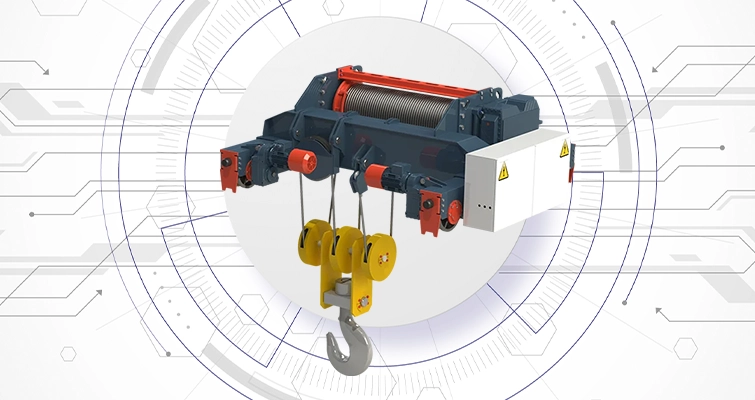
Can an Overhead Crane Be Installed in an Existing Factory?
Can an Overhead Crane Be Installed in an Existing Factory?
Structural Suitability, Engineering Assessment and Installation Guide for Existing Industrial Facilities
One of the main objectives of modern manufacturing companies is to increase production capacity without constructing an entirely new facility. Expanding an existing factory is often more economical than building a new plant, and it allows companies to improve operational efficiency while keeping investment costs under control.
In this context, overhead crane systems play a critical role in the safe, fast and controlled movement of heavy loads. They improve material handling, reduce dependence on forklifts, shorten production cycles and help create a safer working environment.
However, many factory owners and production managers ask the same question:
Can an overhead crane be installed in an existing factory?
In most cases, the answer is yes.
Nevertheless, every industrial building has different structural characteristics. For this reason, installing an overhead crane is not simply a matter of purchasing the equipment and placing it inside the building. The existing factory structure must be evaluated in terms of columns, foundations, roof construction, building span, lifting height, production layout and dynamic load resistance.
An incorrectly designed crane system may reduce equipment performance and create serious risks related to structural safety, employee protection and production continuity. Therefore, a successful overhead crane installation must begin with a professional site survey, structural analysis and project-specific engineering calculations.
Based in Konya, Eser Vinç develops customized overhead crane, bridge crane and gantry crane solutions for industrial facilities throughout Türkiye. The company manages the entire process from site inspection and engineering design to manufacturing, installation, commissioning and after-sales service.
This comprehensive guide explains whether an overhead crane can be added to an existing factory, which structural criteria must be evaluated, when reinforcement may be required and how the correct crane system should be selected.
Can an Overhead Crane Be Added to an Existing Factory?
The direct answer is yes, but the applicable solution differs from one facility to another.
In some factories, the existing building columns and supporting structure may be strong enough to carry the crane runway. In other facilities, a completely independent steel support structure may be required. Some projects may also need structural reinforcement, new foundations, additional columns or specially designed runway beams.
Before choosing the crane, the following factors must be assessed:
- Existing structural system
- Steel or reinforced concrete column capacity
- Column spacing
- Foundation strength
- Roof structure
- Available crane span
- Required lifting height
- Maximum load capacity
- Daily lifting frequency
- Production line arrangement
- Electrical infrastructure
- Crane duty class
- Future capacity requirements
Because each factory is different, the final decision must be based on engineering calculations rather than visual inspection alone.
Why Is an On-Site Technical Survey Necessary?
A professional crane project always begins with an on-site technical survey.
The purpose of the survey is not limited to measuring the building. Engineers must also understand how materials move through the facility and how the crane will interact with production equipment, employees and other handling systems.
During the survey, the following questions are considered:
- What is the maximum load to be lifted?
- How many lifting cycles will be completed each day?
- From which point will the load be picked up?
- Where will it be transported?
- Will the crane operate continuously or occasionally?
- How many shifts does the factory operate?
- Is future production expansion expected?
- Are there machines, ducts, pipes or lighting systems in the crane travel path?
- Is there sufficient space for maintenance access?
- Will one crane or multiple cranes operate on the same runway?
This analysis helps determine the crane type, capacity, speed, span, control method and structural requirements.
A proper technical survey also helps prevent future redesign costs. If structural restrictions are identified before manufacturing begins, the crane can be engineered to suit the actual building rather than forcing the building to suit a standard crane.
How Is the Existing Factory Structure Evaluated?
An overhead crane transfers more than the lifted load to the building.
During operation, the structure is exposed to several forces, including:
- Vertical wheel loads
- Dynamic lifting effects
- Acceleration and deceleration forces
- Horizontal side thrust
- Braking forces
- Load swing
- Vibration
- Repetitive fatigue loads
- Impact loads
These forces must be considered when evaluating whether the building can safely support the crane system.
Column Assessment
The columns are among the most critical structural components.
Engineers examine:
- Column dimensions
- Steel profile sections
- Reinforcement details in concrete columns
- Material quality
- Connection plates
- Weld quality
- Anchor bolts
- Buckling resistance
- Load transfer points
- Existing damage or corrosion
A column that appears visually strong may not necessarily be suitable for crane loads. The dynamic forces created by a travelling crane differ significantly from static roof loads.
Runway Beam Assessment
The runway beams carry the crane wheels and transfer the operating loads to the columns.
They must be checked for:
- Bending strength
- Shear capacity
- Lateral torsional buckling
- Vertical deflection
- Horizontal deflection
- Fatigue resistance
- Rail alignment
- Connection strength
- Local flange stress
- Wheel load distribution
Excessive deflection or misalignment can lead to wheel wear, rail damage, vibration and uncontrolled movement.
Foundation Assessment
In some projects, the columns may be adequate while the foundations are not.
The crane creates additional vertical and horizontal reactions at column bases. If the existing foundations were designed only for the building roof and wall loads, they may require strengthening.
Possible solutions include:
- Enlarging existing foundations
- Constructing new reinforced concrete footings
- Adding anchor systems
- Installing independent foundations
- Strengthening base plates
- Connecting new foundations to the existing structural system
Roof and Building Frame Assessment
The roof structure must also be reviewed.
In many industrial buildings, roof trusses, ventilation ducts, lighting lines and sprinkler systems occupy the upper working zone. These components may restrict lifting height or interfere with crane travel.
The engineering team must confirm that sufficient safety clearance exists between the crane, roof structure and building services.
Which Measurements Are Required for an Overhead Crane Project?
Many customers focus only on lifting capacity. However, capacity is just one part of the design process.
The following measurements are equally important.
Crane Span
The crane span is the distance between the centre lines of the runway rails.
It determines the main girder length and directly affects:
- Crane weight
- Girder design
- Wheel loads
- Structural cost
- Deflection
- Motor sizing
A wider span generally requires a stronger and heavier crane structure.
Lifting Height
Lifting height is the vertical distance the hook can travel.
It should not be confused with the total building height. Engineers must consider:
- Hook approach
- Hoist dimensions
- Girder depth
- Roof clearance
- Load height
- Machine height
- Required safety distance
- Floor level differences
Incorrect lifting-height calculations may make it impossible to position loads over machines or production lines.
Hook Approach
Hook approach defines how close the hook can reach the end wall or side of the building.
This is especially important in narrow factories, where every metre of usable space matters.
A poor hook approach may leave large dead zones where loads cannot be lifted.
Runway Length
The runway length determines how far the crane can travel along the building.
It should cover the required production area and provide access to loading, machining, assembly and storage zones.
Available Headroom
Headroom is the vertical space required between the runway level and the highest point of the crane.
Low-headroom designs can be used in buildings where the roof height is limited.
Can a New Crane Runway Be Built Inside an Existing Factory?
Yes.
Many older factories were constructed without a crane runway. In such cases, several engineering alternatives may be used.
Installing Runway Beams on Existing Columns
If the existing columns have sufficient strength, brackets and runway beams may be added to them.
This method can be economical, but it requires detailed structural verification.
Building an Independent Steel Support Structure
An independent steel structure is one of the most common solutions for existing factories.
New columns and runway beams are constructed inside the building without transferring significant crane loads to the original structure.
Advantages include:
- Reduced dependence on the existing building
- Flexible design
- Easier future expansion
- Better control of crane loads
- Suitability for older structures
Adding Steel Brackets to Existing Columns
In certain projects, steel brackets may be attached to columns to support the runway beams.
The column, connection and anchor design must be verified carefully.
Structural Reinforcement
When the existing structure is close to the required capacity, strengthening may be possible through:
- Additional steel plates
- Bracing systems
- Larger beam sections
- Column reinforcement
- New connections
- Foundation strengthening
- Additional support points
The reinforcement method must always be designed specifically for the project.
Single-Girder or Double-Girder Overhead Crane?
The correct crane type depends on much more than lifting capacity.
Single-Girder Overhead Crane
A single-girder crane uses one main bridge beam.
It is generally suitable for:
- Light and medium loads
- Smaller workshops
- Moderate operating frequency
- Short or medium spans
- Projects with controlled investment budgets
Its advantages may include:
- Lower crane weight
- Lower structural loads
- Lower manufacturing cost
- Easier installation
- Simpler maintenance
- Reduced power consumption
However, it may offer less hook height and lower capacity than a double-girder design.
Double-Girder Overhead Crane
A double-girder crane uses two main bridge beams.
It is generally preferred for:
- High lifting capacities
- Large spans
- Heavy-duty operation
- Continuous production
- High lifting heights
- Process crane applications
- Demanding industrial environments
Its advantages include:
- Higher load capacity
- Better structural stability
- Greater lifting height
- Suitability for heavy-duty hoists
- Improved maintenance access
- Flexibility for platforms and service walkways
The selection should be based on load characteristics, operating frequency, building geometry and expected service life.
When Is Structural Reinforcement Required?
Reinforcement is not necessary in every project.
It may be required when:
- Existing columns are undersized
- Foundations cannot support additional loads
- The building lacks sufficient lateral stability
- The runway beam deflection is excessive
- The crane duty class is high
- The span is large
- Multiple cranes will operate on the same runway
- The existing steel structure has corrosion or damage
- Dynamic forces exceed the original design assumptions
- Production capacity is expected to increase in the future
The need for reinforcement can only be determined after structural calculations.
Can the Installation Be Completed While Production Continues?
In many projects, yes.
A professional installation plan can reduce downtime by dividing the work into stages.
Possible strategies include:
- Weekend installation
- Night-shift installation
- Working during planned maintenance periods
- Section-by-section runway installation
- Preassembling components outside the factory
- Scheduling lifting operations during low-production hours
- Coordinating the work with factory safety teams
However, some stages may still require temporary shutdowns for safety reasons.
These may include:
- Heavy lifting
- Welding near active production lines
- Electrical connection
- Load testing
- Commissioning
- Work above occupied areas
The installation schedule should be prepared in coordination with the customer before site work begins.
Why Must the Electrical Infrastructure Be Checked?
An overhead crane is both a mechanical and electrical system.
A reliable power supply is essential for safe and stable operation.
The following components must be evaluated:
- Main incoming power supply
- Voltage and frequency
- Cable cross-section
- Electrical panel capacity
- Earthing system
- Short-circuit protection
- Emergency stop circuits
- Power conductor system
- Control voltage
- Radio remote-control compatibility
- Frequency inverter requirements
- Cable festoon or conductor bar system
Insufficient electrical infrastructure may cause:
- Motor overheating
- Voltage drops
- Sudden shutdowns
- Reduced lifting performance
- Control faults
- Increased maintenance requirements
- Safety risks
Where necessary, a dedicated crane power line and control panel should be installed.
Is a Retrofitted Overhead Crane Safe?
Yes, provided that the system is correctly engineered, manufactured, installed and tested.
A crane added to an existing factory can operate as safely as a crane installed in a new building.
The critical factors are:
- Accurate structural analysis
- Correct crane capacity
- Suitable runway design
- Proper wheel-load calculations
- High-quality manufacturing
- Professional welding and assembly
- Reliable electrical systems
- Load testing
- Proper commissioning
- Periodic inspection
- Operator training
- Preventive maintenance
A generic crane should never be installed without adapting it to the specific building conditions.
In Which Industries Are Retrofitted Overhead Cranes Commonly Used?
Overhead cranes are added to existing facilities in many industries.
Common applications include:
- Machinery manufacturing
- Steel construction
- Metal processing
- Automotive suppliers
- Defence industry
- Foundries
- Mould manufacturing
- Agricultural machinery production
- Marble and natural stone processing
- Energy equipment manufacturing
- Food production
- Logistics centres
- Warehouses
- Maintenance workshops
- Prefabricated concrete production
Each industry has different load characteristics.
For example, a foundry may require heat-resistant components, while a precision manufacturing facility may need smooth acceleration and accurate positioning. A steel fabrication plant may require high capacity, while a maintenance workshop may prioritise compact dimensions and low headroom.
What Factors Affect the Cost of Installing an Overhead Crane in an Existing Factory?
The final investment cost depends on many variables.
The main cost factors include:
- Lifting capacity
- Crane span
- Runway length
- Lifting height
- Single-girder or double-girder design
- Hoist type
- Duty class
- Travel speeds
- Control system
- Radio remote control
- Structural reinforcement
- New foundations
- Independent steel support structure
- Electrical infrastructure
- Installation conditions
- Access restrictions
- Coating and corrosion protection
- Special safety systems
- Load testing
- Transport distance
For this reason, accurate pricing requires a site survey and technical project.
A low initial quotation should not be the only selection criterion. A poorly designed system may create higher maintenance, downtime and reinforcement costs later.
Common Mistakes in Retrofitted Overhead Crane Projects
Several errors are frequently seen in existing-factory crane projects.
Selecting the Crane Only by Capacity
A 10-ton crane is not automatically suitable for every factory requiring a 10-ton lift.
Span, duty class, lifting height and operating frequency are equally important.
Ignoring Dynamic Loads
The building may support the static load but fail to resist braking, acceleration and lateral forces.
Using Existing Columns Without Structural Verification
Visual inspection is not enough. Columns and foundations must be calculated.
Failing to Plan Future Capacity
A system designed only for current production may become insufficient within a few years.
Neglecting Maintenance Access
The crane must be designed so that motors, brakes, ropes, wheels and electrical components can be serviced safely.
Underestimating Electrical Requirements
An unsuitable power supply can reduce performance and increase failure risk.
Skipping Load Testing
Every crane should be tested and commissioned according to the applicable project and safety requirements.
Eser Vinç Turnkey Overhead Crane Solutions
An overhead crane investment is not simply the purchase of lifting equipment. It is a long-term engineering investment that affects productivity, employee safety and production continuity.
Eser Vinç begins each project with an on-site technical survey and develops a solution based on the facility’s actual operating conditions.
Its project approach includes:
- On-site technical survey
- Needs assessment
- Structural suitability review
- Crane capacity calculation
- Runway system design
- Three-dimensional engineering
- Single-girder crane manufacturing
- Double-girder crane manufacturing
- Bridge crane systems
- Gantry crane systems
- Electrical and control design
- Professional installation
- Testing and commissioning
- Operator training
- Preventive maintenance
- Spare-parts support
- After-sales technical service
With its Konya-based manufacturing capability and project experience, Eser Vinç provides industrial lifting solutions for companies across Türkiye and international markets.
Frequently Asked Questions
Can an overhead crane be installed in an existing factory?
Yes. The installation is possible after evaluating the building structure, available space, required capacity and runway system.
Can an overhead crane be installed in an old factory?
In many cases, yes. Older factories may require structural reinforcement, new columns or an independent runway system.
Is reinforcement always necessary?
No. Reinforcement is only required when the existing structure cannot safely carry the crane loads.
Can production continue during installation?
In many projects, installation can be planned in stages to minimise downtime. Some operations may still require temporary shutdowns for safety.
How long does the installation take?
The duration depends on crane capacity, span, runway length, reinforcement requirements and site conditions. A detailed schedule can be prepared after the technical survey.
Is a single-girder or double-girder crane more suitable?
The answer depends on capacity, span, lifting height, operating frequency and duty class. The selection should be based on engineering calculations.
Can the crane runway be installed independently from the building?
Yes. Independent steel columns and runway beams can be constructed inside the existing factory.
Can more than one crane operate on the same runway?
Yes, but the runway, columns, collision prevention system and control strategy must be designed for multiple-crane operation.
Is a radio remote control suitable for an existing factory?
In many applications, yes. Radio remote controls can improve visibility and operator mobility, but the working environment must be evaluated.
What information is needed before requesting a quotation?
Useful initial information includes:
- Maximum lifting capacity
- Approximate building width
- Required lifting height
- Runway length
- Type of load
- Daily operating frequency
- Factory location
- Existing structural drawings, if available
Conclusion
Installing an overhead crane in an existing factory is both possible and highly beneficial when the project is supported by correct engineering.
The most important stages are structural assessment, accurate measurement, crane selection, runway design, electrical planning, professional installation and load testing. Existing factories may use their current columns, reinforced structural components or completely independent steel support systems depending on the project conditions.
A properly designed overhead crane can:
- Improve material flow
- Reduce manual handling
- Increase production speed
- Improve workplace safety
- Reduce forklift traffic
- Support future production growth
- Make better use of factory space
Eser Vinç provides project-specific overhead crane, bridge crane and gantry crane systems from initial site survey to commissioning and after-sales service. By evaluating each factory individually, Eser Vinç develops safe, efficient and long-lasting lifting solutions tailored to industrial production requirements.