




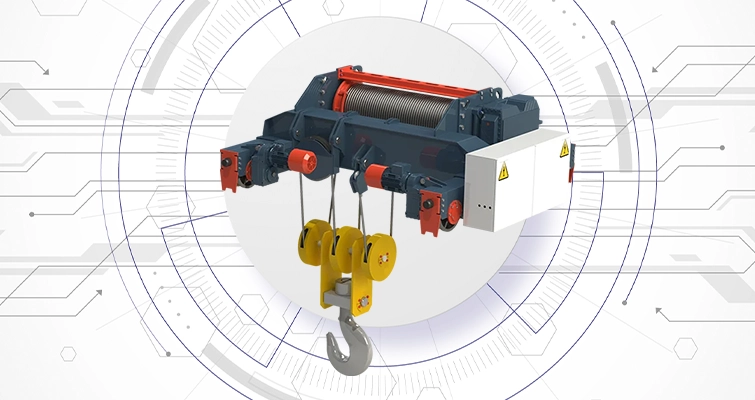
How to Choose an Overhead Crane or Monorail Crane System Based on Your Factory Layout
How to Choose an Overhead Crane or Monorail Crane System Based on Your Factory Layout
Why Is Crane Selection Based on Factory Layout Important?
Moving heavy loads safely, efficiently, and under control is essential to the daily operations of industrial facilities. Components such as machine parts, structural steel elements, molds, production equipment, and palletized materials often need to be transported between different workstations. Selecting the right lifting system helps support these operations.
Overhead bridge cranes and monorail crane systems are two commonly considered solutions for industrial lifting and material handling. However, these systems do not serve exactly the same purposes. The most suitable option depends on the factory's production area, ceiling height, column positions, load weights, and material movement routes.
For example, an overhead bridge crane may be appropriate when loads need to reach multiple points across a large production area. A monorail crane system may be more suitable when materials need to travel along a defined route between production stations.
Before selecting a system, businesses should evaluate lifting capacity, travel distance, lifting height, operating frequency, and site conditions.
Eser Vinç emphasizes the importance of assessing these factors together when evaluating industrial crane solutions for different facilities.
What Is an Overhead Bridge Crane, and Where Is It Used?
An overhead bridge crane is an industrial lifting system that typically consists of a bridge girder spanning between two parallel runways and a hoisting unit that travels along the bridge. The combination of bridge movement and hoist travel allows loads to be positioned at different points within the crane's designed operating area.
Depending on the system configuration, an overhead bridge crane can provide movement in two directions across a workspace. This makes it possible to transport loads between multiple workstations without relying on a single fixed transfer route.
Which facilities use overhead bridge cranes?
Overhead bridge cranes may be suitable for a range of industrial environments, including:
Structural steel manufacturing facilities
Machinery and equipment manufacturing plants
Heavy industrial production facilities
Assembly and maintenance workshops
Foundries and industrial processing plants
Industrial warehouses handling large or heavy components
Choosing an overhead crane requires more than determining the maximum load weight. Bridge span, lifting height, hook approach distance, travel speeds, duty classification, and the capacity of supporting structures must also be considered.
When materials need to be moved between different points across a large production area, an overhead bridge crane can provide operational flexibility. However, the building structure, runway supports, and load-bearing components must be assessed to ensure that they can safely accommodate the crane's loads.
What Is a Monorail Crane, and How Does It Work?
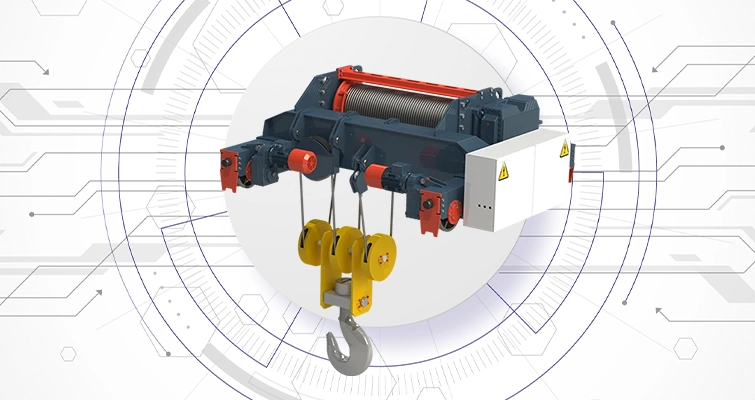
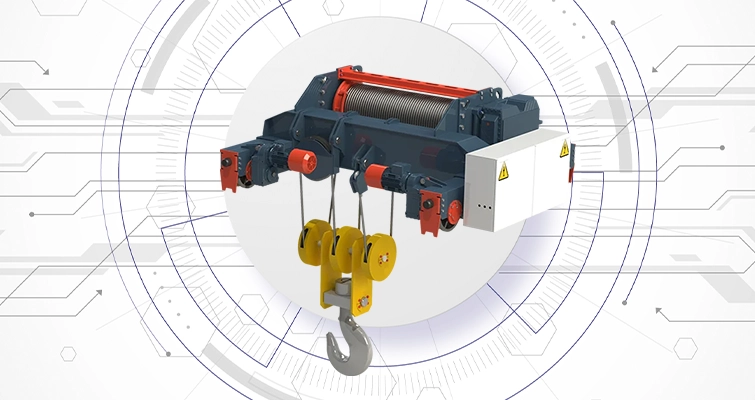
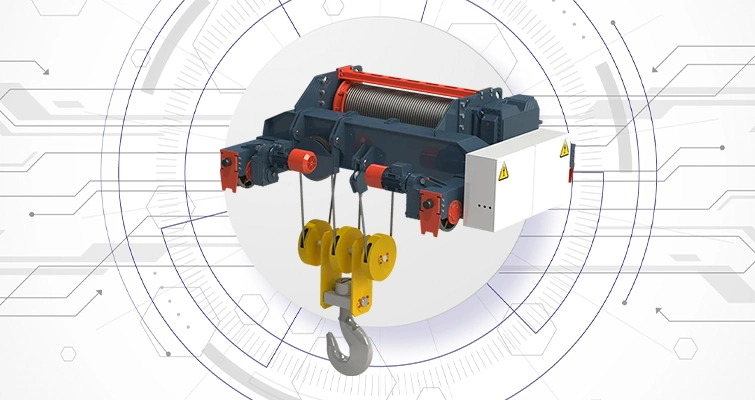
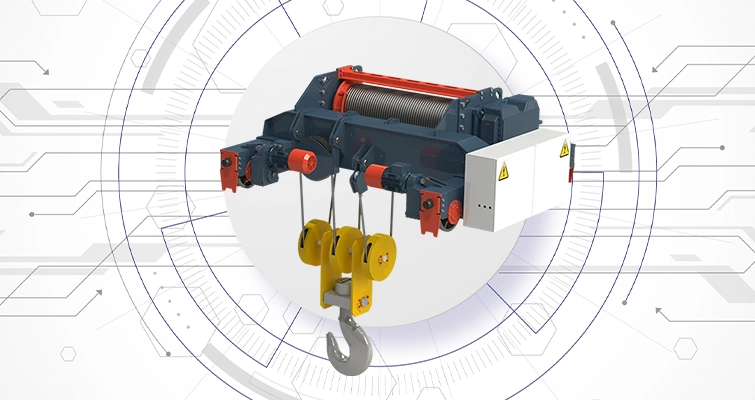
A monorail crane is a lifting and material handling system in which the hoisting unit travels along a single rail or designated track. The route can be designed around the facility's material flow. Depending on engineering requirements, it may follow a straight line or incorporate changes in direction.
The primary purpose of a monorail crane is to move loads between designated points along a planned route. This makes it a potential solution for production lines where materials are repeatedly transferred between workstations.
Which applications are suitable for monorail cranes?
Monorail crane systems may be considered for applications such as:
Transferring materials between production stations
Moving components along assembly lines
Repeated lifting and transportation along a defined route
Delivering materials to machinery and equipment feeding points
Moving components between stages of a manufacturing process
One of the main advantages of a monorail crane is the ability to design its travel route around the production process. However, a single-track system may not be sufficient when loads must reach multiple locations throughout a facility.
For this reason, monorail crane manufacturing and system design should account for loading and unloading points, load dimensions, obstacles along the route, and access for maintenance—not simply the length of the rail.
What Are the Main Differences Between Overhead Cranes and Monorail Cranes?
Both systems are designed to lift and transport loads, but they differ in their movement patterns and typical applications.
| Comparison criteria | Overhead bridge crane | Monorail crane |
|---|---|---|
| Travel area | Can access a broad workspace, depending on the design | Travels along a designated track or route |
| Main purpose | Moving loads between different points across an area | Moving loads between specified locations |
| Configuration | Typically uses a bridge girder and parallel runways | Uses a single track for the hoisting unit |
| Production flow | Can support diverse operations across large areas | Can suit repetitive transfers along a defined route |
| Design considerations | Bridge span, runways, lifting height, and building structure | Route geometry, transfer points, supports, and obstacles |
| Potential application | Flexible load positioning across a large area | Consistent transportation between designated stations |
This comparison provides general guidance. Actual performance and suitability depend on the selected model, rated capacity, travel route, structural design, and operating conditions.
How to Choose the Right Crane System for Your Factory
Selecting an industrial crane is not simply an equipment purchasing decision. It is an engineering consideration that can affect production, material flow, and workplace safety.
1. Determine the weight and characteristics of the loads
The first step is to identify the maximum weight and physical characteristics of the loads to be lifted. Their dimensions, center of gravity, attachment points, and stability during transportation should also be assessed.
Crane capacity should not be based solely on the average load weight. The heaviest loads within the intended operating scenarios and the weight of lifting accessories must be accounted for in accordance with the relevant design criteria.
2. Analyze the material transportation route
Clearly identify where loads will be picked up and where they need to be delivered.
If loads must reach different points across a large area, an overhead bridge crane may be worth considering. If materials repeatedly travel along a specific production line, a monorail crane may be a suitable option.
The route analysis should account for machinery, columns, doors, other equipment, pedestrian walkways, and maintenance areas.
3. Assess ceiling height and structural conditions
The building's total height is not necessarily the same as the available lifting height. Beams, runways, hoisting equipment, hook approach distance, and other mechanical components can affect the usable lifting height.
The building's columns, beams, and existing supporting structures must also be evaluated from an engineering perspective. Installation should not proceed until the structure's suitability for the crane loads has been verified.
4. Evaluate operating frequency and production demands
The number of lifting operations per shift, the distance loads must travel, and how frequently the system will operate all influence crane selection.
The needs of an intermittently used maintenance area differ from those of a continuously operating production line. The duty classification, speeds, brakes, control system, and component selection should reflect actual operating conditions.
5. Plan for maintenance and service access
Long-term crane performance depends partly on whether maintenance can be performed safely and efficiently. Access should be considered for electrical panels, motors, braking systems, hoisting equipment, and components subject to wear.
Planning maintenance access in advance can help reduce future access difficulties and avoidable production interruptions.
6. Consider future production requirements
If a business plans to increase production capacity, install additional machinery, or modify an existing production line, these possibilities should be considered during crane system planning.
Accounting for future requirements may help align the system with the facility's long-term objectives. However, changes to capacity or travel routes should never be assumed possible without an appropriate engineering assessment.
How Do Overhead and Monorail Crane Systems Affect Production Efficiency?
A properly selected crane system can help reduce time spent moving materials manually or using unsuitable equipment. It can also support a more organized flow of materials between production stations.
For example, a factory transporting large metal components through several manufacturing stages may benefit from an overhead bridge crane that can reach different workstations. In contrast, a production line where components repeatedly follow the same route may benefit from a monorail system.
Efficiency does not depend on crane travel speed alone. Load attachment, lifting, positioning, operator visibility, coordination with other machinery, and safe operating procedures can all affect total handling time.
For this reason, the entire factory material handling process should be considered when choosing a crane system, rather than focusing exclusively on equipment specifications.
Safety and Engineering Planning for Industrial Crane Systems
Safety should be considered from the earliest stages of overhead and monorail crane design. Rated capacity, supporting structure strength, lifting equipment, travel limits, control arrangements, and site conditions must be assessed as part of an integrated system.
Depending on the project and applicable requirements, the evaluation may include:
Selecting equipment according to capacity and operating conditions
Engineering checks for runways, beams, connections, and supporting structures
Selecting suitable electrical and control systems
Determining the required protective and motion-limiting devices based on risk assessment
Training operators in safe use
Planning maintenance, inspection, and servicing
Verifying compliance with applicable regulations and standards
The same protective devices or technical solutions should not be assumed to apply to every crane. Requirements vary according to equipment type, design, application, and the regulations in force.
Explore Industrial Crane Solutions with Eser Vinç
The right industrial crane system should match a facility's lifting requirements, production layout, available operating space, and material handling needs.
Based in Konya, Türkiye, Eser Vinç operates in crane manufacturing and industrial lifting solutions. When planning an overhead bridge crane, monorail crane, or another lifting system, businesses should assess load capacity, travel routes, lifting height, structural conditions, and operating frequency together.
A technical evaluation of the project requirements helps identify a solution that aligns with the facility's operating needs.
Planning an overhead crane or monorail crane system for your factory? Contact Eser Vinç to discuss your project requirements and learn more about industrial lifting solutions for your facility.
Frequently Asked Questions
What is the main difference between an overhead bridge crane and a monorail crane?
An overhead bridge crane can access different points across a workspace, depending on its configuration. A monorail crane typically moves along a designated rail or route. The appropriate option depends on the facility's material handling requirements.
Which factories are suitable for overhead bridge cranes?
Overhead bridge cranes may be suitable for machinery manufacturing, metalworking, structural steel production, and industrial facilities that need to move heavy loads across a large workspace. Building structure, capacity, and operating conditions should be assessed before selection.
When should a monorail crane be considered?
A monorail crane may be appropriate when materials need to move along a specific line or defined route during manufacturing and assembly operations. Route design, load characteristics, and potential obstacles should be evaluated.
How is crane lifting capacity determined?
Crane capacity is determined by considering load weights and characteristics, intended use, operating frequency, and relevant engineering criteria. Lifting accessories and other loads must also be included in the design calculations where applicable.
Can an overhead crane be installed in an existing factory?
An overhead crane may be installed in some existing facilities. However, columns, beams, runway supports, and foundations must be assessed by qualified professionals. Installation should not proceed until structural suitability has been confirmed.
Can overhead and monorail cranes be used in the same factory?
Yes. Both systems may be used in the same facility when different production areas have different material handling requirements. Their routes, capacities, movement zones, and operating procedures should be planned to work safely together.
What should businesses consider when choosing an overhead crane manufacturer in Konya?
When evaluating crane manufacturers in Konya, businesses should review technical design capabilities, experience in assessing project requirements, product range, installation services, and after-sales support. Proposals should be compared based on technical scope and suitability—not price alone.
Conclusion
Overhead bridge cranes and monorail cranes provide different solutions for industrial material handling. An overhead bridge crane may be suitable for reaching multiple points across a large workspace, while a monorail crane may be appropriate for moving materials repeatedly along a designated route.
Choosing the right system requires a combined assessment of load capacity, facility layout, available lifting height, operating frequency, structural conditions, and safety requirements. A properly planned crane system can help organize production activities and improve material handling operations.
Contact Eser Vinç to learn more about industrial crane solutions suited to your facility's requirements.