




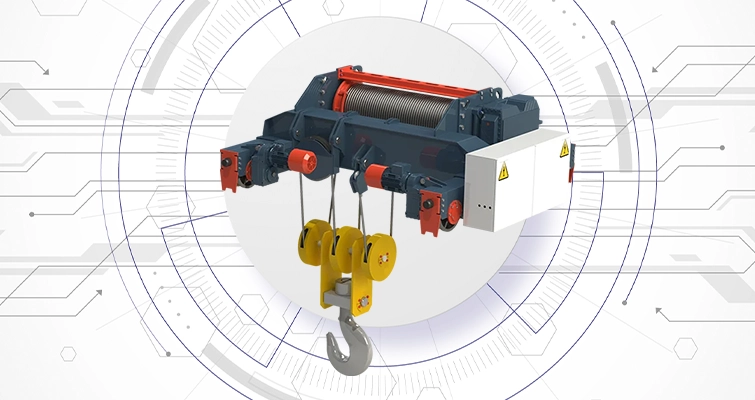
How to Plan Space Utilization and Load Transfer in Overhead Crane, Monorail Crane, and Ceiling Crane Systems
How to Plan Space Utilization and Load Transfer in Overhead Crane, Monorail Crane, and Ceiling Crane Systems
Introduction
Efficient material handling is essential for manufacturing facilities, warehouses, workshops, and industrial production lines. The way loads move between workstations affects production speed, workplace safety, equipment accessibility, and the overall use of available space. For this reason, selecting an industrial crane is not simply a matter of determining lifting capacity. The entire facility layout and the intended load transfer routes must also be evaluated.
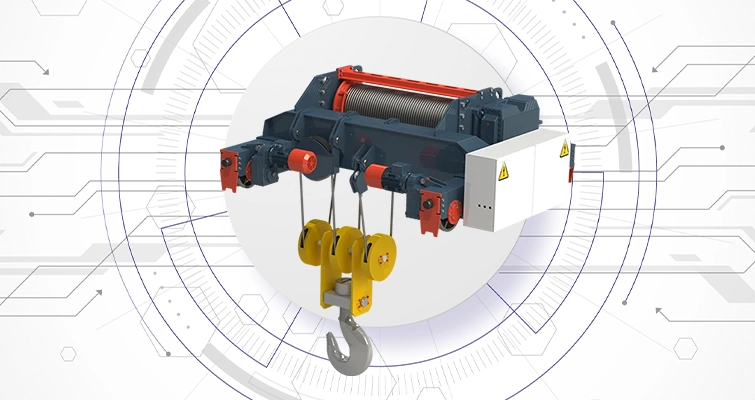
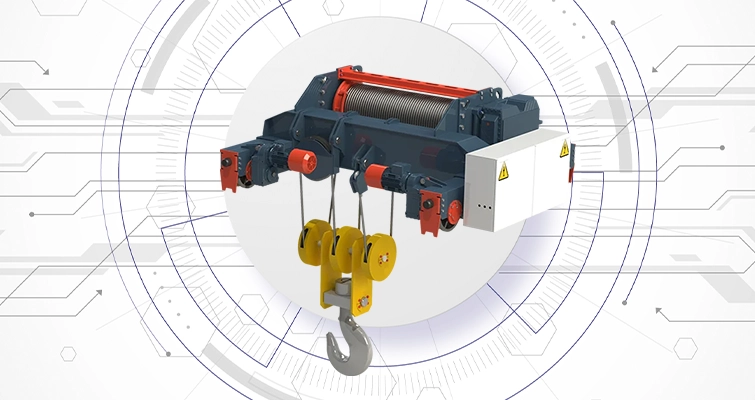
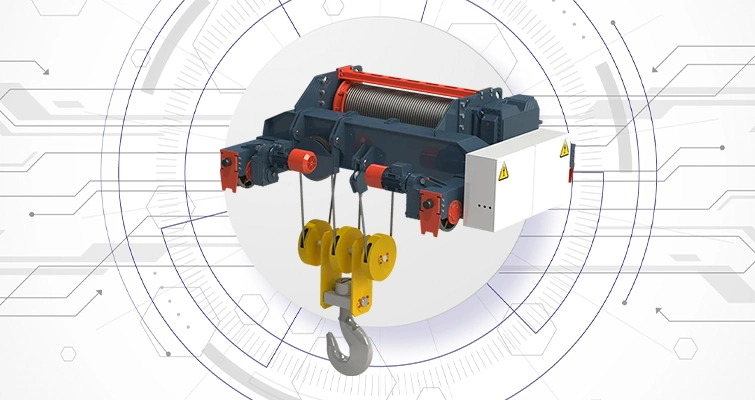
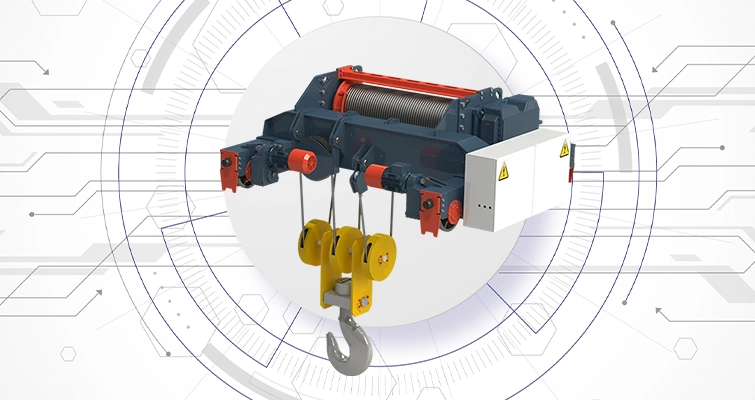
Overhead bridge cranes, monorail cranes, and other overhead lifting systems offer different solutions for moving materials within industrial facilities. An overhead bridge crane can serve a broad rectangular working area, while a monorail crane follows a defined route and can be suitable for repetitive transfers between specific points.
Understanding how these systems use available space helps businesses choose a solution that supports their production processes and future operational needs.
Why Is Space Utilization Important in Industrial Crane Systems?
Industrial buildings often contain production machinery, storage areas, columns, assembly stations, personnel walkways, and maintenance zones. A crane system must operate in coordination with these elements without unnecessarily restricting production activities.
Poorly planned crane installations can create several problems:
Unused areas within the crane's potential working zone
Difficulties transferring loads between production stages
Insufficient hook approach distances near walls or machinery
Conflicts with lighting, ventilation, piping, or other building services
Restricted access for maintenance and inspections
Unnecessary load movements and longer handling times
A well-designed crane layout considers both the physical characteristics of the building and the actual movement of materials throughout the production process.
The objective is not necessarily to cover the largest possible area. Instead, the system should provide appropriate access to the required workstations while maintaining safe operating clearances.
1. Planning the Working Area of an Overhead Bridge Crane
An overhead bridge crane, also known as an overhead travelling crane, typically consists of a bridge structure that moves along runway rails, with a trolley carrying the hoisting mechanism.
This configuration can serve a large rectangular area and is commonly used in factories, manufacturing plants, workshops, and industrial assembly facilities.
Determining the runway span and travel distance
The runway span is the distance between the supporting runway rails. It must be coordinated with the building structure and the dimensions of the area where loads need to be handled.
The bridge's travel distance should cover the required working stations without extending unnecessarily into areas where lifting operations are not needed.
During planning, engineers should evaluate:
Building width and length
Runway rail positions
Structural columns and load-bearing elements
Locations of production machines
Loading and unloading points
Required travel limits and safety clearances
The crane runway and its supporting structure must be assessed for the loads and forces imposed by the crane. Existing building structures should not be assumed suitable without an appropriate engineering assessment.
Evaluating hook approach distance
Hook approach distance refers to how close the lifting hook can reach toward a particular boundary or obstruction, depending on the crane configuration.
This dimension can determine whether operators can lift materials close to a wall, machine, or loading station. A crane may have sufficient nominal capacity and span but still be unsuitable if its hook cannot reach the required lifting points.
The position of the trolley, hoist design, bridge geometry, and nearby obstructions all influence usable coverage.
Calculating usable lifting height
Building height alone does not determine the usable lifting height of a crane. The available lifting height depends on the clearance between the crane structure, hoist, hook, floor, and the load's required operating position.
Planning should consider:
The height of the highest load to be handled
The required clearance above machinery
The hoist's dimensions and lifting stroke
Roof beams and structural elements
Overhead pipes, cable trays, and lighting
The required safety clearances during operation
Accurate measurements help ensure that the crane can handle loads in the intended area without interfering with the building or production equipment.
2. Planning the Route of a Monorail Crane
A monorail crane system moves a hoist or trolley along a defined track, which may be straight or designed with suitable curves and transitions depending on the system.
Unlike an overhead bridge crane, which can provide movement across a wider rectangular area, a monorail system is generally designed around a particular material transfer route.
Mapping the load transfer route
The first step is to identify where materials originate, where they need to go, and how frequently transfers occur.
For example, a manufacturing facility may need to move components from a storage station to a machining area and then to an assembly station. A monorail system may be appropriate when the transfer follows a predictable route.
The route planning process should evaluate:
Starting and destination points
Load dimensions and weight
Required lifting and lowering positions
Frequency of transfers
Production line sequence
Possible obstructions along the route
Maintenance access and emergency arrangements
The track layout should reflect the actual production process rather than forcing workers to adapt to an inconvenient lifting route.
Checking structural support requirements
Monorail tracks may be supported by the building structure or by a purpose-designed support framework. The appropriate arrangement depends on the building, track configuration, operating loads, and engineering requirements.
The supporting structure must be evaluated for the relevant loads and forces. Track alignment, connection details, deflection limits, and maintenance accessibility should also be considered during design.
Reducing unnecessary material movement
A properly planned monorail system can reduce repeated handling and help create a more consistent material flow between workstations.
However, the route should be designed around the complete operating process. If materials must frequently move in different directions or between multiple work areas, a monorail alone may not provide the required flexibility.
3. Managing Available Height in Ceiling and Overhead Crane Systems
The term “ceiling crane” is sometimes used informally to describe overhead lifting equipment installed near the roof or ceiling of a facility. However, it does not always identify one specific standardized crane configuration.
For accurate selection, the actual system should be defined—for example, an overhead bridge crane, an under-running crane, or a suspended monorail system.
Making effective use of vertical space
Overhead lifting systems can help keep floor areas available for machinery, workstations, storage, and vehicle movement. Nevertheless, the benefits depend on the building's structural design and the crane configuration.
The following dimensions should be checked:
Building floor-to-roof height
Height and position of roof beams
Crane girder depth
Hoist and trolley dimensions
Hook travel and required lifting height
Height of the largest load
Required clearances above equipment and personnel areas
The design should also consider access for inspection and maintenance. A system that maximizes lifting height but prevents safe maintenance access may create operational difficulties.
Coordinating crane systems with building services
Lighting, ventilation ducts, sprinkler pipes, electrical cable trays, and other building services can affect crane movement and available clearance.
These elements should be coordinated with the crane layout before installation. Where necessary, qualified engineers and the relevant building-services teams should review potential conflicts.
Early coordination can reduce the risk of expensive modifications after the crane system has been installed.
4. Can Overhead Bridge Cranes and Monorail Cranes Be Used in the Same Facility?
Yes. In some industrial facilities, overhead bridge cranes and monorail cranes can complement each other.
An overhead bridge crane may serve a broad production or assembly area, while a monorail system handles repetitive transfers along a specific line.
For example, a factory might use an overhead bridge crane to move large components between production zones and a monorail crane to transfer smaller components through a sequence of processing stations.
Before combining systems, the project team should assess:
Whether the systems share or overlap operating areas
Potential collisions between cranes, loads, and structures
Different lifting heights and hook travel paths
Load transfer points between systems
Operator visibility and control arrangements
Electrical supply and control-system coordination
Emergency procedures and access restrictions
Where operating zones overlap, suitable engineering controls and operating procedures should be established. The final design must account for the specific equipment and applicable safety requirements.
5. Common Mistakes in Factory Load Transfer Planning
Even when the correct type of crane is selected, inadequate layout planning can reduce efficiency and create safety risks.
Selecting a crane based only on lifting capacity
Lifting capacity is important, but it does not determine whether a crane can reach every required point. Span, travel distance, lifting height, hook approach, load dimensions, and operating frequency must also be evaluated.
Ignoring the production workflow
A crane route that does not match the production sequence can result in unnecessary movements, waiting times, and handling bottlenecks.
The material flow should be mapped before the equipment is selected.
Overlooking structural requirements
Crane loads and operating forces must be considered in the supporting structure's design. Existing building components require appropriate engineering verification before being used to support crane equipment.
Failing to plan for maintenance
Crane components need inspection and maintenance access. The layout should provide suitable access to hoists, motors, brakes, electrical equipment, and other serviceable components.
Neglecting future production needs
Production layouts can change as machinery, storage areas, and product types evolve. Where practical, the project should consider foreseeable changes in load dimensions, lifting frequency, and production flow.
Future flexibility should be balanced against initial investment, engineering constraints, and operational requirements.
6. Technical Factors to Evaluate Before Selecting a Crane System
The following comparison provides a starting point for choosing a suitable configuration. The final decision should be based on a project-specific engineering assessment.
| Evaluation criterion | Overhead bridge crane | Monorail crane |
|---|---|---|
| Typical movement | Across a rectangular working area | Along a defined track |
| Working area | Broad area between runway limits | Primarily the designed route |
| Common applications | Manufacturing, assembly, workshops | Repetitive transfers and production lines |
| Route flexibility | Suitable for movement in two horizontal directions | Depends on track layout |
| Structural considerations | Runways and supporting structure | Track supports and connections |
| Key planning dimensions | Span, travel, hook approach, lifting height | Track route, lifting positions, clearances |
| Best selection basis | Required coverage and load-handling tasks | Required transfer route and production flow |
Other factors include rated capacity, load characteristics, duty cycle, operating environment, lifting speed, control method, safety equipment, electrical supply, and maintenance requirements.
No single crane configuration is ideal for every facility. A system should be selected according to the tasks it must perform and the conditions in which it will operate.
7. Industrial Crane Project Planning and Manufacturing in Konya
Industrial crane projects require coordination between the facility's operating needs, the building structure, and the technical characteristics of the selected equipment.
For businesses looking for industrial crane systems, overhead bridge cranes, monorail crane systems, or crane manufacturing in Konya, the project evaluation should begin with a clear understanding of the intended lifting operations.
Before requesting a proposal, businesses can prepare the following information:
Facility drawings or available layout plans
Required lifting capacity
Maximum load dimensions
Required lifting height
Travel distances and lifting points
Expected operating frequency
Environmental conditions, including dust, temperature, or humidity
Existing electrical and structural information
Planned production changes, where known
This information helps the engineering team assess the application and identify the most appropriate system configuration.
Eser Vinç provides industrial crane solutions for different lifting and material-handling requirements. The appropriate equipment and configuration should be determined according to the project specifications, operating conditions, and engineering assessment.
For facilities planning a new installation or reviewing an existing crane layout, a technical evaluation can help identify suitable options for improving material flow and using available space effectively.
Frequently Asked Questions (FAQ)
1. What is the difference between an overhead bridge crane and a monorail crane?
An overhead bridge crane generally moves across a rectangular working area using a bridge and trolley. A monorail crane moves along a defined track and is often suitable for repetitive transfers between specific locations.
2. Which crane system is better for a factory?
The best system depends on the required working area, load capacity, lifting height, production flow, building structure, and frequency of operation. An overhead bridge crane may be suitable for broad-area coverage, while a monorail crane may be preferable for a defined transfer route.
3. How is the working area of an overhead crane calculated?
The working area is evaluated using the runway span, bridge travel distance, trolley movement, hook approach distances, lifting height, and relevant structural or operational clearances. Actual usable coverage depends on the specific crane design and building layout.
4. Can a monorail crane be installed in an existing factory?
Potentially, yes. The existing building structure, support requirements, track route, clearances, load characteristics, and applicable safety requirements must be evaluated before installation.
5. Does a higher ceiling always provide greater lifting height?
No. The crane structure, hoist dimensions, roof beams, building services, and required clearances all affect the usable lifting height.
6. Can overhead bridge cranes and monorail cranes operate together?
They can be used in the same facility when their operating areas, load transfer points, structural requirements, controls, and safety arrangements are properly coordinated.
7. What information is needed to plan an industrial crane project?
Important information includes the facility layout, required lifting capacity, load dimensions, lifting height, travel distances, operating frequency, environmental conditions, and details of the supporting structure.