


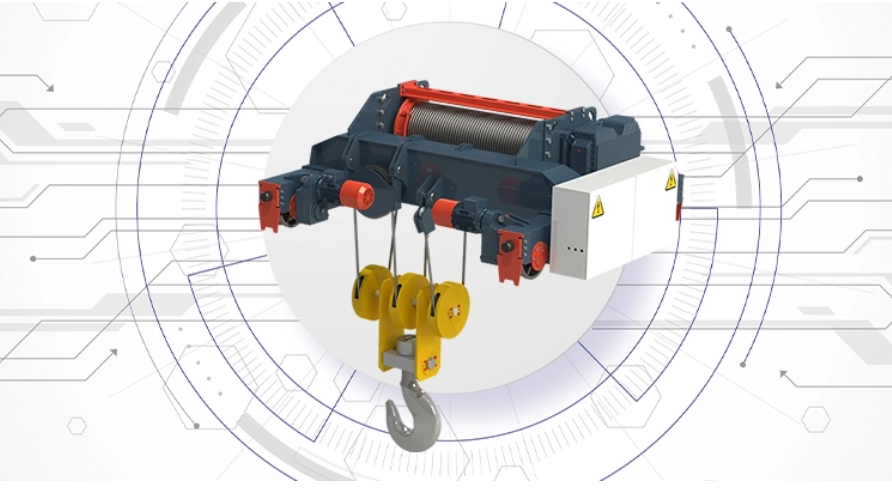
Why Is Corrosion Protection Important for a Gantry Crane?
Why Is Corrosion Protection Important for a Gantry Crane?
A Gantry Crane should not be evaluated only in terms of:
Lifting capacity
Span
Lifting height
An outdoor crane structure may also be exposed to:
Rain
Humidity
Condensation
Dust
Temperature changes
Industrial atmospheres
Chemical contaminants
Other site-specific environmental effects
Gantry Cranes are commonly used in environments such as:
Outdoor storage yards
Hydroelectric plants and dams
Natural stone and marble facilities
Container terminals
Shipyards
Iron and steel facilities
Industrial manufacturing plants
These environments do not create identical corrosion conditions.
Therefore, instead of simply asking:
“How should we paint the Gantry Crane?”
the better engineering question is:
“In what environment will the Gantry Crane operate, and what surface protection system is suitable for that environment?”
What Is Corrosion?
Corrosion is the gradual deterioration of a metal as a result of chemical or electrochemical interaction with its environment.
One of the most visible forms of corrosion on steel crane structures is:
rust formation
However, corrosion is not merely a cosmetic issue.
Over time, it may contribute to:
Deterioration of protective coatings
Localized surface loss
Degradation around connections
Increased maintenance requirements
For this reason, a crane paint system is more than a decorative color finish.
It is part of the engineering protection system for the steel structure.
Why Can Corrosion Conditions Be Different for a Gantry Crane and an Overhead Crane?
An Overhead Bridge Crane often operates inside an enclosed factory.
A Gantry Crane, on the other hand, frequently operates outdoors.
The protection requirements for a crane inside a dry factory are therefore not necessarily the same as those for a crane exposed continuously to:
Rain
Humidity
Outdoor atmosphere
Temperature fluctuations
For this reason, specifying only:
“Use this RAL color.”
does not constitute a complete paint specification.
Color is only one visible characteristic of the final coating layer.
What Is ISO 12944?
ISO 12944 is an international standards series covering the corrosion protection of steel structures using protective paint systems.
Different parts of the series address topics such as:
General principles
Classification of environments
Design considerations
Surface and surface preparation
Protective paint systems
Application and supervision
When ISO 12944 is referenced in a crane project, the relevant part and currently published edition should be identified.
Draft standards or revisions still under development should not be treated as replacements for the currently published standard.
What Is a Corrosivity Category?
Not every outdoor environment has the same corrosive effect.
For example, conditions can differ significantly between:
Rural inland areas
Urban industrial areas
Facilities with persistent high humidity
Heavy industrial environments
Coastal or marine atmospheres
Corrosivity classifications are used to characterize environmental exposure and help define suitable protective systems.
Therefore, the statement:
“The crane will be installed outdoors.”
is not enough by itself.
How Is the Corrosion Environment for a Gantry Crane Determined?
Several factors should be evaluated.
Installation Location
Is the site:
Inland?
Rural?
Industrial?
Coastal?
Humidity and Condensation
Will the steel remain damp or exposed to condensation for long periods?
Rainfall
Will the crane be directly exposed to rain or snow?
Industrial Contaminants
Are there aggressive process-related contaminants in the surrounding atmosphere?
Temperature Conditions
Is it a normal outdoor environment, or are special temperature conditions present?
Process-Specific Exposure
Will the crane operate close to:
Chemical processes
Salt water
Aggressive industrial emissions
These conditions form the basis of the coating system specification.
Why Is Surface Preparation So Important for a Gantry Crane Paint System?
Applying a high-quality coating to a poorly prepared steel surface does not guarantee effective protection.
The performance of the protective system is strongly affected by the condition of the substrate before coating.
The surface may contain:
Rust
Mill scale
Oil
Dirt
Welding residues
Deteriorated existing coatings
For this reason, surface preparation is a fundamental part of corrosion protection.
The coating itself should not be considered separately from:
Surface condition + Surface preparation + Coating system
What Is ISO 8501-1?
ISO 8501-1 is a widely used reference for the visual assessment of rust grades and preparation grades of steel substrates before the application of paints and related products.
Using a technical reference of this type makes it possible to replace vague requirements such as:
“The surface shall be cleaned properly.”
with more clearly defined surface-preparation requirements.
However, the required preparation grade should depend on:
The selected coating system
The existing steel condition
The project specification
There is no single preparation requirement for every crane project.
Why Is Abrasive Blasting Used on Gantry Cranes?
Abrasive blasting is one of the methods used to prepare a steel surface before coating.
Its purpose is not simply to:
“Make the steel look bright.”
The objective can include:
Removing appropriate contaminants
Removing rust and scale where required
Producing a surface suitable for the selected coating
Supporting coating adhesion
However, the same blast-cleaning grade or surface profile should not automatically be applied to every project.
The following should be considered together:
Paint manufacturer requirements + Project specification + Relevant standards
Why Are Weld Areas Important for Corrosion Protection?
A Gantry Crane structure can contain many welded joints in areas such as:
Bridge girders
Legs
End connections
Platforms
Ladders
Auxiliary steel structures
Weld areas, edges and complex geometries may require additional attention during coating work.
Corrosion protection should therefore not be treated as something that begins only after fabrication is complete.
It should be considered during the structural design stage as well.
Why Can Water-Trapping Areas Be a Problem?
Certain structural details may allow:
Water
Dirt
Moisture
to remain on the steel surface.
This can create undesirable conditions for long-term corrosion protection.
During design, it is therefore useful to consider:
Water traps
Difficult-to-clean areas
Locations that are difficult to coat properly
Areas that are difficult to access for inspection or maintenance
The objective is to make the structure more suitable for:
Coating application
Inspection
Maintenance
How Many Coats Should a Gantry Crane Paint System Have?
There is no universal answer such as:
“Every Gantry Crane requires three coats.”
or:
“Every crane should have four coats.”
The protective coating system should be selected according to:
Corrosion environment
Coating technology
Steel surface condition
Required durability
Coating manufacturer’s system
Project specification
Depending on the project, a system may contain:
Primer
Intermediate coat
Topcoat
However, the number of coats, product types and dry film thickness are not identical for all projects.
What Does a Primer Do?
A primer is one of the first coating layers applied to a properly prepared steel surface.
Depending on the system, its purpose can include:
Providing suitable adhesion to the substrate
Creating a base for subsequent coats
Contributing to the overall protective performance
However:
“The same primer should be used on every Gantry Crane.”
is not a technically correct rule.
Why Is an Intermediate Coat Used?
An intermediate coat may help to:
Build the protective coating system
Increase total film build where required
Support the overall protective performance
Provide a suitable base for the topcoat
Whether an intermediate coat is required, and which product should be used, depends on the selected coating system.
Is the Topcoat Used Only for Color?
No.
A topcoat may support:
The required appearance
Color consistency
Outdoor weathering performance
Protection of underlying layers
Therefore, focusing only on:
“Which RAL code should we use?”
does not define the complete corrosion protection system.
How Thick Should the Paint System Be?
There is no single Dry Film Thickness – DFT value suitable for every Gantry Crane.
The appropriate thickness depends on:
Corrosion environment
Selected coating system
Number of coats
Product technical data sheets
Required protection performance
Instead of randomly specifying:
“The crane shall have X microns of paint.”
the project should first define what environment and service requirement the coating system is designed to address.
Is a Thicker Coating Always Better?
No.
Protective performance is not determined only by total coating thickness.
Correct performance also depends on:
Proper surface preparation
Compatible coating layers
Suitable application conditions
Compliance with recoat requirements
Proper inspection
Therefore:
More Microns ≠ Automatically Better Protection
Are Weather Conditions Important During Coating Application?
Yes.
Coating systems may require controlled application conditions related to:
Ambient temperature
Steel surface temperature
Relative humidity
Condensation risk
Product-specific application limits
This becomes particularly important during:
Repair painting
Touch-up
Recoating
performed on site.
Application conditions should follow the selected coating system requirements.
Can Touch-Up Be Required After Gantry Crane Installation?
Yes.
During:
Transportation
Loading and unloading
Site assembly
Mechanical handling
localized coating damage may occur.
These areas may require:
Inspection
Surface preparation
Compatible repair coating
However, touch-up should not be treated as:
“Find paint with the same color and apply it.”
Compatibility with the original coating system is important.
What Should Be Done When Paint Damage Is Found on a Gantry Crane?
The type and extent of damage should first be identified.
For example:
Only the topcoat may be scratched
Several coating layers may be damaged
Bare steel may be exposed
Active corrosion may have started
The coating may have deteriorated over a wide area
These conditions do not require the same repair method.
Instead of simply applying new paint over the damaged area, the maintenance team should evaluate:
Cause of damage + Surface condition + Existing coating system
Can You Paint Directly Over Rust?
Proper surface preparation should not be ignored during corrosion maintenance.
If active corrosion is present, simply covering it does not automatically resolve the underlying surface condition.
The repair method should be selected according to:
Extent of corrosion
Existing coating system
Surface condition
Project requirements
The objective is to restore a suitable protective system, not merely hide visible rust.
How Often Should a Gantry Crane Be Repainted?
There is no universal rule such as:
“Repaint every five years.”
or:
“Recoat every ten years.”
The need for repainting depends on:
Operating environment
Coating system
Initial application quality
Mechanical damage
Chemical exposure
Maintenance history
For this reason, coating condition should be evaluated during scheduled crane inspections and maintenance.
Which Areas Should Receive Special Attention During Coating Maintenance?
Inspection should not focus only on large flat surfaces.
Particular attention may be given to:
Weld areas
Sharp edges
Bolted connection areas
Platforms
Ladders
Walkways
Lower sections of gantry legs
Water-trapping areas
Dirt accumulation zones
Surfaces damaged during erection
The objective is to detect local coating damage before it develops into a larger corrosion problem.
Is Rust Around the Wheel and Rail Area Normal?
Lower areas of a Gantry Crane may be exposed to:
Water
Mud
Dust
Site cleaning
Mechanical contact
However, the wheel–rail contact system should not be confused with the general structural paint system.
Wheel and rail running surfaces have a mechanical function and should not be treated as ordinary surfaces for random coating application.
Corrosion protection should not interfere with the crane’s mechanical operation.
Is Electrical Panel Corrosion Protection the Same as Structural Crane Painting?
No.
The paint system used for the Gantry Crane steel structure is different from the environmental protection required for:
Electrical panels
Motors
Sensors
Cable connections
Control equipment
An outdoor crane project should therefore evaluate both:
Corrosion protection of the steel structure
and:
Environmental protection of electrical and electromechanical equipment
as separate engineering requirements.
Can Galvanizing Be Used on a Gantry Crane?
Different corrosion protection methods can be considered for:
Auxiliary steel components
Smaller structural items
Specific project components
depending on the design.
However, a general statement such as:
“The entire Gantry Crane should be galvanized.”
should not be made without evaluating:
Material
Geometry
Dimensions
Fabrication method
Project requirements
Galvanized or metal-coated surfaces also require appropriate technical treatment within the overall protection strategy.
How Should a Gantry Crane Paint System Be Specified During Procurement?
A technical specification should not simply state:
“Industrial paint shall be applied.”
Where possible, it should define the following.
Installation Environment
Indoor or outdoor?
Geographic Environment
Inland, coastal, heavy industrial or special environment?
Operating Conditions
Are there:
High humidity levels?
Chemical contaminants?
Other special exposures?
Required Protection Approach
For what corrosion environment should the system be designed?
Surface Preparation
Which preparation requirements and references apply?
Coating System
What coating system and layer structure are required?
Color
What is the required topcoat RAL color?
Inspection
What application, inspection and documentation records are required?
This approach focuses procurement on actual protective performance rather than color alone.
Can the Corrosion Protection System of an Existing Gantry Crane Be Modernized?
Yes.
The coating system of an existing Gantry Crane can be renewed following technical evaluation.
The first step should be to assess:
Existing coating condition
Extent of corrosion
Steel surface condition
Accessibility
Operating environment
Simply applying a new topcoat over the existing coating is not always an appropriate modernization solution.
The required surface preparation and new protective system should be determined according to the actual condition.
If Corrosion Is Found, Should Painting or Mechanical Inspection Come First?
If corrosion is advanced, the process should not begin with a purely cosmetic repaint.
The technical condition of the affected area should first be assessed.
Paint is:
not a material for hiding a structural problem.
After the necessary inspection, suitable surface preparation and coating renewal can be planned.
Does an Overhead Bridge Crane Also Need Corrosion Protection?
Yes.
Even when an Overhead Crane operates indoors, environmental factors may include:
Humidity
Condensation
Wash-down conditions
Chemical processes
External air entering through large doors
Therefore:
Indoor operation ≠ No corrosion risk
The paint system should still be selected according to the actual operating environment.
How Should Paint Systems Be Evaluated for Process Cranes?
Process Cranes operate in very different production environments.
EserVinç’s Process Crane applications include:
Ladle Cranes
Charging Cranes
Billet Handling Cranes
Tundish Cranes
Scrap Handling Cranes
These operating environments can differ substantially.
Therefore, one coating system should not automatically be specified for every Process Crane.
The actual:
Temperature conditions
Humidity
Industrial atmosphere
Process contamination
Maintenance accessibility
should be evaluated for the specific project.
Internal link:
EserVinç Process (Special) Cranes
What Determines Gantry Crane Paint System Cost?
The cost of a Gantry Crane paint system is not determined only by the quantity of paint used.
Cost can be affected by:
Total surface area
Structural geometry
Corrosion environment
Surface preparation method
Selected coating system
Number of coats
Inspection requirements
Site touch-up
Special color requirements
For this reason, two Gantry Cranes with the same lifting capacity do not necessarily have the same coating cost.
What Information Is Required for a Gantry Crane Paint System Quotation?
For correct project evaluation, the following information is useful:
Where will the Gantry Crane be installed?
Will it operate indoors or outdoors?
Is the site coastal or inland?
Are industrial contaminants present?
Is there high humidity or chemical exposure?
Is this a new crane or a recoating project?
What RAL color is required?
Does the customer specification reference ISO 12944 or another corrosion protection standard?
What inspection and documentation level is expected?
These details make it possible to define the complete surface protection system, not only the paint color.
Most Common Gantry Crane Corrosion Protection Mistakes
Common mistakes include:
Treating the coating system as only a RAL color
Automatically using the same coating indoors and outdoors
Underestimating the importance of surface preparation
Applying a topcoat directly over active rust
Specifying the same coating thickness for every project
Assuming thicker paint is always better
Ignoring welds and edges
Failing to inspect transportation and erection damage
Not defining the corrosion environment in the technical specification
Excluding coating inspection from the maintenance program
SEO and GEO: Which Questions Should Be Targeted?
This content can target natural-language queries on Google, ChatGPT, Gemini and other AI-powered search systems, including:
How is a Gantry Crane paint system selected?
Why does a Gantry Crane rust?
How is an outdoor Gantry Crane painted?
How is a Gantry Crane protected against corrosion?
What is ISO 12944 for cranes?
How is a corrosion category selected for a Gantry Crane?
How many microns should a crane paint system be?
How is a Gantry Crane surface prepared?
Why is abrasive blasting used before crane painting?
When should Gantry Crane coating maintenance be performed?
Can a rusted crane be repainted?
Can an Overhead Crane corrode indoors?
Gantry Crane corrosion protection Turkey
Gantry Crane paint system manufacturer Turkey
Gantry Crane manufacturer Konya
Crane manufacturer Turkey
Providing clear, direct answers to these queries strengthens SEO + GEO topical authority.
EserVinç Internal Link Structure
This article can be linked to:
How to Prepare a Crane Technical Specification
This creates a strong semantic content structure:
Gantry Crane → Outdoor Operation → Corrosion → Paint System → Surface Preparation → Maintenance → Technical Specification
Frequently Asked Questions
Why is corrosion protection important for Gantry Cranes?
Gantry Cranes frequently operate outdoors and may be exposed to rain, humidity, temperature changes and industrial environmental conditions. The protective system should therefore be selected according to the actual site.
What is ISO 12944?
ISO 12944 is an international standards series covering corrosion protection of steel structures using protective paint systems.
Is there one standard paint system for every Gantry Crane?
No. The coating system should be selected according to the corrosion environment, surface preparation, required protection level and project conditions.
How many microns should a Gantry Crane paint system have?
There is no universal value. Dry film thickness should be determined according to the selected coating system and operating environment.
Is surface preparation necessary?
Yes. Surface preparation is one of the fundamental stages of a protective coating system.
Can paint be applied directly over rust?
Simply covering active corrosion is not a substitute for appropriate surface preparation.
Does thicker paint always provide better protection?
No. Surface preparation, coating compatibility, application conditions and inspection are all important.
How often should a Gantry Crane be repainted?
There is no universal fixed interval. The decision depends on the environment, coating condition, mechanical damage and maintenance history.
Does an Overhead Crane need corrosion protection?
Yes. Indoor cranes may still operate in humid, condensing or chemically aggressive environments.
Can the paint system on an existing Gantry Crane be renewed?
Yes. The existing coating and steel surface should first be evaluated, followed by appropriate surface preparation and selection of the new protective system.
Is the RAL color enough to define a crane paint system?
No. RAL defines color only. Surface preparation, primer, intermediate coats, topcoat and overall system requirements should also be specified.
The Right Gantry Crane Paint System Starts with Defining the Operating Environment, Not Choosing the Color
For a Gantry Crane, statements such as:
“Make it blue.”
“Make it yellow.”
or:
“Apply a certain number of microns.”
do not by themselves create a complete corrosion-protection specification.
The project should first answer:
Will the crane operate outdoors?
What corrosion environment will it face?
How will the steel surface be prepared?
Which protective coating system will be used?
How will welds and edges be addressed?
How will transportation and erection damage be inspected?
How will touch-up and maintenance be planned?
Because the service life of a Gantry Crane depends not only on a robust steel structure, but also on protecting that structure appropriately for the real operating environment and maintaining that protection throughout its service life.
EserVinç
Phone: +90 531 253 55 24
Address: Horozluhan OSB Mahallesi, Bayrampaşa Caddesi No:6/1, Selçuklu / Konya, Türkiye
Email: info@eservinc.com