




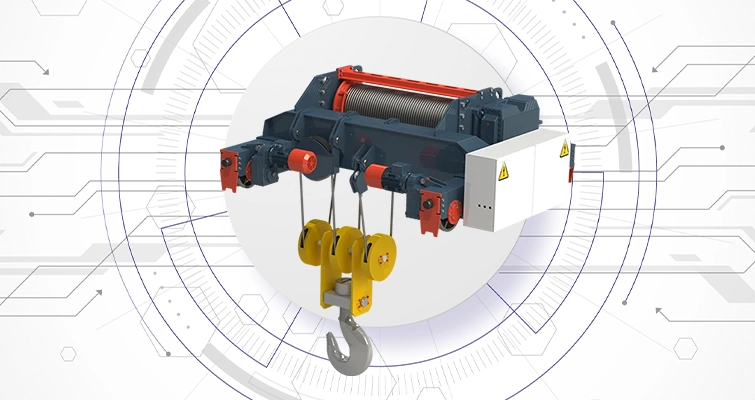
PROCESS CRANE PRICES 2025 Cost Factors, Heavy-Duty Applications, and Investment Guide
PROCESS CRANE PRICES 2025
Cost Factors, Heavy-Duty Applications, and Investment Guide
In modern industrial facilities, process cranes are among the most critical lifting systems used to ensure uninterrupted production. Industries such as steel manufacturing, foundries, power plants, shipyards, and heavy machinery production rely heavily on process cranes for safe and efficient material handling.
As industrial investments continue to grow, many companies are searching for information about Process Crane Prices in 2025, the factors that influence pricing, and how to choose the right system for their operations.
Unlike standard overhead cranes, process cranes are engineered for continuous operation, high-duty cycles, and demanding industrial environments. Therefore, pricing is determined according to the specific requirements of each project.
Why Are Process Cranes Different from Standard Cranes?
Process cranes are designed for:
- Continuous operation
- Heavy-duty lifting
- High daily duty cycles
- Harsh industrial environments
As a result, they utilize:
- Heavy-duty motors
- Reinforced gearboxes
- Advanced braking systems
- High-strength steel structures
- Industrial-grade electrical components
These features significantly impact the overall investment cost.
Factors Affecting Process Crane Prices
Lifting Capacity
The lifting capacity is one of the most important factors affecting crane pricing.
Common capacities include:
- 10 Ton Process Crane
- 20 Ton Process Crane
- 32 Ton Process Crane
- 50 Ton Process Crane
- 100 Ton Process Crane
Higher capacities require larger structural components and more powerful lifting equipment.
FEM Duty Classification
Process cranes are typically designed according to:
FEM 3m
Suitable for intensive industrial operations.
FEM 4m
Designed for continuous heavy-duty applications.
Higher FEM classifications increase durability and operational life but also affect project costs.
Crane Span
The distance between runway rails significantly influences the design.
Larger spans require:
- Stronger girders
- Additional steel
- More complex engineering calculations
This directly affects crane pricing.
Lifting Height
The required lifting height impacts:
- Wire rope length
- Drum capacity
- Motor power requirements
Higher lifting heights generally increase project costs.
Operating Environment
Special environments may require customized designs:
- Steel mills
- Foundries
- High-temperature facilities
- Dust-intensive production plants
- Chemical processing facilities
- Outdoor industrial applications
Additional protection systems can affect pricing.
Automation Level
Modern process cranes may include:
- PLC control systems
- Variable Frequency Drives (VFD)
- Anti-Sway Technology
- Digital load monitoring
- Remote diagnostics
Advanced automation increases operational efficiency while influencing overall investment costs.
What Should Be Considered Before Investing in a Process Crane?
Many companies focus solely on initial purchase costs. However, total ownership cost is equally important.
Key considerations include:
Equipment Quality
High-quality motors, gearboxes, and lifting components reduce long-term maintenance expenses.
Correct FEM Classification
Selecting the proper duty class prevents premature wear and costly downtime.
Service Support
Reliable after-sales support is critical for continuous operation.
Spare Parts Availability
Easy access to spare parts ensures long-term operational reliability.
Risks of Choosing a Low-Cost Process Crane
Selecting a crane based solely on price may lead to:
- Frequent breakdowns
- Production interruptions
- Increased maintenance costs
- Reduced equipment lifespan
- Safety risks
A process crane should be viewed as a long-term industrial investment rather than a short-term expense.
Industries That Use Process Cranes
Process cranes are widely used in:
Steel Manufacturing Plants
Foundries
Power Generation Facilities
Defense Industry
Heavy Machinery Production
Shipbuilding and Shipyards
These industries require cranes capable of operating under demanding conditions every day.
Eser Vinç Process Crane Solutions
Eser Vinç delivers customized process crane solutions designed for heavy industrial operations.
Key advantages include:
✔ FEM 3m and FEM 4m compliant designs
✔ Heavy-duty lifting systems
✔ PLC-controlled automation solutions
✔ Anti-Sway Technology
✔ Advanced safety systems
✔ Nationwide service network across Türkiye
✔ Long-lasting mechanical components
Each project is engineered according to the customer's operational requirements.
Process Crane Prices in 2025 depend on multiple factors including lifting capacity, FEM classification, span length, lifting height, and automation requirements.
Choosing the right crane involves evaluating long-term performance, operational efficiency, and maintenance costs rather than focusing solely on the initial investment.
Eser Vinç continues to provide reliable and high-performance process crane solutions for heavy industries across Türkiye and international markets.