




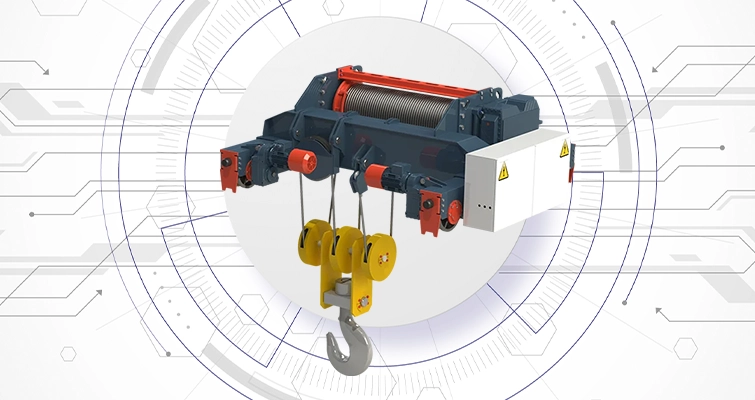
Electrical Power Supply Systems for Industrial Cranes: Differences Between Festoon, C-Rail, and Cable Reels
Electrical Power Supply Systems for Industrial Cranes: Differences Between Festoon, C-Rail, and Cable Reels
Why Are Electrical Power Supply Systems Important for Industrial Cranes?
Industrial cranes are widely used in factories, warehouses, production facilities, steel plants, and heavy industrial environments to move loads safely and efficiently. Reliable operation depends not only on mechanical design but also on the effective delivery of electrical power to moving components.
As a crane bridge, trolley, or hoisting mechanism moves, its cables must be guided and protected against excessive bending, abrasion, and entanglement. An unsuitable cable management system may increase maintenance requirements, restrict movement, and contribute to unplanned downtime.
For this reason, industrial crane electrical power supply systems play an important role in equipment reliability and production continuity.
Festoon systems, C-Rail cable carrier systems, and motorized cable reels are among the solutions used to manage cables in moving industrial equipment. The most suitable option depends on crane design, travel distance, electrical requirements, and operating conditions.
1. What Is an Industrial Crane Electrical Power Supply System?
An industrial crane electrical power supply system consists of the components that deliver electrical power and, where necessary, control signals to crane motors, control panels, and other electrical equipment.
In overhead bridge cranes, the bridge and trolley move along different axes. Gantry cranes may also travel over long distances along ground-mounted rails, depending on the installation.
These movements require an appropriate cable management arrangement to ensure that cables follow the required path while remaining protected from mechanical stress.
When designing a crane power supply system, engineers should consider:
Crane travel distance and movement directions
Number, cross-sectional area, and electrical requirements of cables
Power requirements of motors and control equipment
Travel speed and operating frequency
Indoor or outdoor installation conditions
Exposure to dust, moisture, heat, and chemicals
Maintenance accessibility and cable replacement requirements
Not every system is suitable for every crane. The final choice should be based on the specific engineering design and operating environment.
2. What Is a Festoon Cable System?
A Festoon system is a cable management solution used to supply power and, where required, control signals to moving industrial equipment. Cables are supported by carriers that move along a designated track, allowing them to extend and gather in a controlled manner as the equipment moves.
Festoon systems can be used in overhead bridge cranes and other industrial applications that require controlled cable movement.
Advantages of Festoon Systems
Organized cable management: Helps keep cables within a defined path and reduces uncontrolled movement.
Maintenance accessibility: Properly designed systems can make cables and carriers easier to inspect and service.
Adaptable configuration: Carrier spacing and cable arrangements can be selected according to travel distance and cable weight.
Compatibility with moving equipment: The system can be designed to accommodate the movement requirements of the crane.
When Should a Festoon System Be Used?
Festoon systems are suitable for applications where cables must move alongside a trolley or another moving component in a controlled manner.
During system design, engineers should consider cable weight, carrier spacing, and the minimum permitted bending radius of the cables. Excessive cable sagging, contact with surrounding structures, and interference with moving components should also be evaluated.
3. What Is a C-Rail Cable Carrier System?
A C-Rail cable carrier system uses moving cable trolleys that travel along a rail with a C-shaped profile. These systems can be used in selected crane applications and other moving industrial mechanisms, depending on the required capacity and configuration.
How Does a C-Rail System Work?
A typical system includes:
C-profile support rail
Moving cable trolleys
Cable clamps and fixing components
Electrical cables suitable for the application
Mounting and end-stop components
As the crane or trolley moves, the cable carriers travel along the rail. This helps guide the cables along a defined route and maintain controlled movement.
Advantages of C-Rail Systems
C-Rail systems help maintain an organized cable route and can simplify inspection and component replacement when properly designed.
Their performance depends on selecting compatible rails, carriers, and cables, as well as ensuring correct installation and alignment.
Is a C-Rail System the Same as a Festoon System?
The terms are related, but they do not mean exactly the same thing.
Festoon describes an approach to supporting and transporting cables alongside moving equipment. C-Rail refers to a type of rail arrangement on which cable carriers travel.
A C-Rail arrangement can therefore be used as part of a Festoon-style cable management solution, depending on the configuration.
4. What Is a Motorized Cable Reel?
A cable reel is a system that winds a cable onto a drum or releases it in a controlled manner. Depending on the application, the reel may use an electric motor, a spring mechanism, or another drive arrangement.
Cable reels can be used in selected gantry crane applications and other mobile industrial equipment where cables need to extend and retract as the equipment moves.
Key Advantages of Cable Reels
Help organize cables during winding and unwinding
Can be suitable for selected outdoor applications
Can accommodate different travel distances when properly designed
Provide a controlled method of managing cable length
However, cable reel selection should not be based on travel distance alone. Cable type, drum diameter, pulling force, travel speed, supply voltage, and operating duty cycle must also be considered.
The reel must be compatible with the cable's permitted bending radius to prevent damage during repeated winding and unwinding.
5. Festoon vs. C-Rail vs. Cable Reels: Key Differences
All three solutions can be used to manage cables in moving industrial equipment, but their operating principles and suitable applications differ.
| Feature | Festoon System | C-Rail System | Cable Reel |
|---|---|---|---|
| Operating principle | Cables move with supporting carriers | Cable trolleys travel along a C-profile rail | Cable winds onto and unwinds from a drum |
| Cable management | Controlled cable support and gathering | Guided movement along a defined rail | Controlled winding and unwinding |
| Potential applications | Moving cranes and industrial equipment | Selected overhead cranes and moving mechanisms | Selected gantry cranes and yard applications |
| Key design consideration | Cable sag and carrier arrangement | Rail, trolley, and cable compatibility | Drum diameter and cable tension |
| Maintenance focus | Cables and carriers | Rails, trolleys, and cables | Drum, drive mechanism, and cable |
This table provides a general comparison. Actual applications may overlap, and the final selection should reflect crane geometry, electrical requirements, and operating conditions.
6. How to Select a Power Supply System for Overhead Bridge Cranes
Selecting an electrical power supply system for an overhead bridge crane requires separate consideration of bridge travel and trolley travel. Each movement axis may have different travel distances, cable requirements, and installation constraints.
Travel Distance
Determine the travel distances of both the bridge and the trolley. Longer distances can influence carrier spacing, cable routing, and the overall arrangement of the system.
Electrical Load
Calculate the electrical requirements of the crane motors, control panels, and other components. Cable cross-sectional area and electrical protection devices should be selected according to appropriate engineering calculations.
Operating Frequency
If a crane performs numerous movements throughout the day, the cable management system must be suitable for the required duty cycle. The mechanical durability of cables and carriers is an important consideration.
Installation Space
The available installation area should be assessed, including columns, beams, nearby machinery, and access for maintenance. These factors are especially important when upgrading an existing facility.
Maintenance and Spare Parts
A system that allows easy inspection and access to components can simplify maintenance planning and replacement work.
7. Cable Management in Gantry Cranes
Gantry cranes are commonly used in storage yards, industrial facilities, and outdoor working environments. Depending on their design, they may travel along ground-mounted rails or other dedicated routes.
Their electrical supply arrangements must account for travel distance and environmental conditions such as rain, dust, sunlight, temperature fluctuations, and wind.
Cable reels and rail-based cable carrier systems may be considered where appropriate.
Important selection criteria include:
Crane travel distance and speed
Location of the electrical power supply
Cable routing and potential obstacles
Cable suitability for environmental conditions
Operating duty cycle of the reel or carrier system
Accessibility for inspection and maintenance
Planning cable management alongside the crane layout can help create a more organized and maintainable installation.
8. Common Problems in Industrial Crane Power Supply Systems
Problems involving cables, carriers, rails, or winding mechanisms can disrupt crane movement and contribute to unplanned downtime.
Cable Wear
Cable wear may result from friction against sharp edges, unsuitable bending, incorrect routing, or the use of cables that are not designed for repeated movement.
Cable Carrier Jamming
Dirt, alignment issues, damaged carriers, and installation errors can interfere with movement along the rail.
Incorrect Cable Selection
Moving industrial applications require cables suitable for their electrical requirements and mechanical movement. Repeated bending and travel conditions should be considered during cable selection.
Inadequate Maintenance
Failure to inspect cables, carriers, rails, and reel mechanisms regularly may delay the detection of developing faults.
Installation Errors
Incorrect alignment, unsuitable mounting, or insufficient clearance can restrict cable movement.
Electrical inspections and repairs should be carried out by qualified personnel after appropriate isolation of power sources and implementation of relevant safety procedures.
9. How to Maintain Industrial Crane Electrical Power Supply Systems
A maintenance plan should be developed according to system type, operating intensity, environmental conditions, and manufacturer recommendations.
Maintenance inspections may include:
Checking cables for cuts, cracks, and signs of wear
Inspecting electrical connections and cable fasteners
Checking the movement of Festoon carriers or C-Rail trolleys
Inspecting rails and mounting components for damage or looseness
Checking cable reel drums and drive mechanisms
Confirming that cables follow the intended route
Identifying unusual noise, vibration, or overheating
Inspection intervals should follow manufacturer guidance and the actual operating conditions. If a damaged cable or faulty component is identified, appropriate safety measures should be taken before repair or replacement.
10. What Are the Benefits of Choosing the Right Power Supply System?
A properly designed electrical power supply system can contribute to reliable crane operation and more manageable maintenance processes.
Organized cable routing: Helps keep cables along their intended path.
Controlled equipment movement: Supports coordinated movement between cables and crane components.
Simplified maintenance: Can improve access to components for inspection and servicing.
Reduced risk of unplanned downtime: Appropriate system selection and preventive maintenance can help manage cable-related failure risks.
Application-specific design: Allows the power supply arrangement to be tailored to travel distances, electrical needs, and site conditions.
These benefits depend on engineering quality, correct installation, appropriate operation, and ongoing maintenance.
11. Industrial Crane Solutions by Eser Vinç
Electrical power supply and cable management systems are important parts of an integrated industrial crane design. They should be evaluated alongside lifting mechanisms, travel systems, and electrical requirements.
Based in Konya, Türkiye, Eser Vinç Mühendislik provides industrial lifting solutions, including overhead bridge cranes, gantry cranes, jib cranes, and process cranes.
For new crane projects or upgrades to existing installations, evaluating travel distances, facility layout, electrical requirements, and operating conditions helps determine the most suitable solution.
Contact Eser Vinç to discuss industrial crane solutions and the technical requirements of your project.
Frequently Asked Questions About Industrial Crane Power Supply Systems
What is the purpose of an industrial crane electrical power supply system?
It delivers electrical power to crane motors and other required components while supporting organized cable movement and protection during crane operation.
What is the difference between Festoon and C-Rail systems?
Festoon describes a method of supporting and transporting cables with moving equipment. C-Rail refers to a system in which cable carriers move along a C-profile rail. A C-Rail arrangement can be used as a Festoon-style solution, depending on the design.
Can cable reels be used on gantry cranes?
Yes. Cable reels can be used in selected gantry crane applications when they are designed for the required travel distance, speed, cable characteristics, and environmental conditions.
Why do industrial crane cables wear out?
Common causes include friction, unsuitable bending, incorrect routing, inappropriate cable selection, and exposure to demanding environmental conditions.
What should be considered when selecting a crane power supply system?
Key factors include travel distance, electrical load, operating frequency, cable type, installation space, environmental conditions, and maintenance requirements. The final selection should be supported by an appropriate engineering assessment.
How often should crane cable systems be maintained?
Maintenance frequency depends on the system type, operating intensity, and manufacturer recommendations. Cables, carriers, rails, and reel mechanisms should be inspected at appropriate intervals.
Conclusion
Electrical power supply systems play an important role in supporting reliable industrial crane operation. Festoon systems, C-Rail cable carriers, and cable reels can each provide suitable solutions for different applications.
The most appropriate system depends on crane type, travel distance, electrical requirements, and environmental conditions. Proper engineering and regular maintenance can improve cable management and support production continuity.
Contact Eser Vinç to discuss industrial crane solutions tailored to your facility's requirements.