


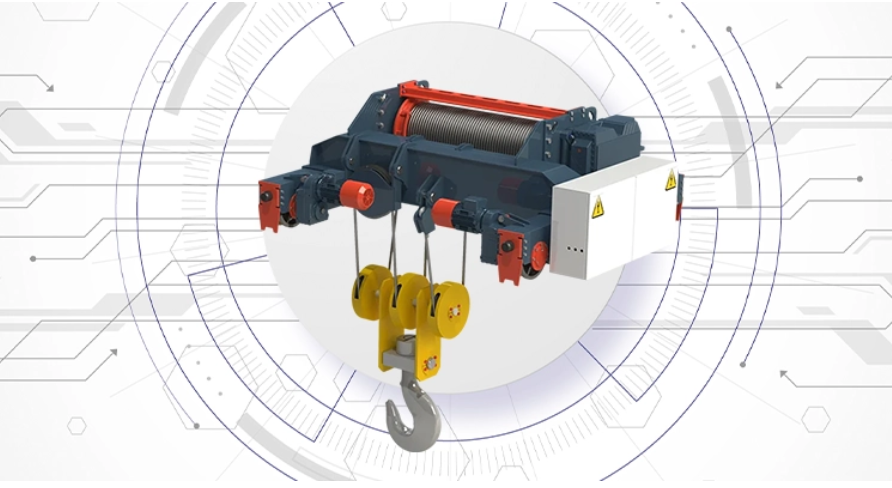
Critical Spare Parts List for Industrial Cranes: Stock Planning Guide for Overhead Bridge Cranes, Gantry Cranes and Process Cranes
Why Is Spare Parts Planning Important for Industrial Cranes?
In an Overhead Bridge Crane, Gantry Crane, Overhead Crane, Travelling Crane or special-purpose Process Crane, not every failure has the same operational impact.
A relatively small electrical component can fail and stop an entire production line.
At the same time, a physically much larger mechanical component may not require replacement for years.
For this reason, the correct strategy is not:
“Let’s keep one spare of every component installed on the crane.”
The more useful question is:
Which component will stop production if it fails, and how long will it take to obtain a replacement?
A practical spare parts strategy should therefore be based on three primary criteria:
Probability of failure + Lead time + Impact on production
What Is a Critical Crane Spare Part?
A critical spare part is a component whose failure can stop the crane completely or significantly disrupt the production process, particularly when the replacement cannot be obtained quickly.
Physical size is not what makes a part critical.
For example, depending on the crane:
A small sensor
A specific encoder
A particular contactor
A drive-control component
may stop the entire crane.
A much larger steel component, on the other hand, may rarely require replacement and may not need to be kept permanently in stock.
Therefore:
Critical Part ≠ Most Expensive Part
and:
Critical Part ≠ Largest Part
Should the Same Spare Parts List Be Used for Every Crane?
No.
A 10-ton Single Girder Overhead Crane and a heavy-duty Process Crane operating three shifts should not have the same spare parts strategy.
Stock planning can be affected by:
Crane type
Lifting capacity
Duty class
Daily operating cycles
Number of shifts
Criticality within production
Motor and gearbox types
Electrical control architecture
Hoisting Unit
Travelling Unit
Environmental conditions
Spare part lead time
For example, if a maintenance Travelling Crane is unavailable for several hours, production may continue.
If a crane integrated directly into the production process fails, however, the complete production line may stop.
The spare parts strategy should reflect this difference.
How Should a Crane Spare Parts Plan Be Prepared?
The most effective method is not to make one list containing every crane component and stock all items at the same level.
Spare parts can instead be classified by operational importance.
Critical Parts
Components that can stop the crane or production line and may require a long time to replace.
Wear and Consumable Parts
Parts that may require replacement depending on operating intensity, wear and maintenance conditions.
Standard Commercial Components
Components that may be readily available from local or general industrial suppliers and may therefore require less permanent stock.
Project-Specific Components
Components requiring:
Special dimensions
Special mounting arrangements
Custom manufacturing
This category can become particularly important for Process Cranes.
Which Hoisting Unit Spare Parts Can Be Critical?
The Hoisting Unit is the primary machinery group responsible for raising and lowering the load.
EserVinç’s Hoisting Unit product architecture covers lifting systems used in Overhead Bridge Cranes, Gantry Cranes and other industrial crane systems.
Internal link:
EserVinç Hoisting Units
Depending on the specific equipment, important spare parts may include:
Brake components
Wire rope
Rope guide
Hook block components
Motor
Gearbox
Sensors
Electrical control components
Why Are Crane Brake Spare Parts Important?
The hoisting brake is one of the critical mechanical components of the Hoisting Unit.
However, it would not be correct to apply a universal rule such as:
“Every factory must keep a complete spare brake in stock.”
The following should first be identified:
Brake type
Brand and model
Operating intensity
Spare parts availability
Process criticality
Depending on the project, the stock strategy may include:
Relevant brake components
Manufacturer-defined replacement parts
A complete brake unit
Any work affecting brake adjustment or safety functionality should follow manufacturer documentation and be carried out by qualified technical personnel.
Should Crane Wire Rope Be Kept in Stock?
Crane wire rope is an important wear component in wire-rope Hoisting Units.
However, it is incorrect to assume that cranes of the same tonnage always use the same rope.
Wire rope selection can depend on:
Rope diameter
Rope construction
Drum system
Sheave system
Reeving
Lifting height
Operating conditions
Therefore, a description such as:
“16 mm crane rope”
is not sufficient for correct spare-part identification.
The complete technical specification should be recorded.
Can the Rope Guide Be a Critical Spare Part?
In some Hoisting Units, the rope guide helps maintain controlled rope movement on the drum.
In a high-use facility, a failure of this component can affect operation of the Hoisting Unit.
It may therefore be included in the spare-parts plan, particularly where:
Several cranes use the same hoist model
The crane operates intensively
Replacement lead time is long
However, the spare rope guide must be fully compatible with the existing drum and Hoisting Unit.
Should a Complete Hook Block Be Kept as a Spare?
Not necessarily.
A hook block can include:
Hook
Sheaves
Shafts
Bearings
Structural body components
At high capacities, a complete hook block may be:
Expensive
Large
Rarely replaced
The decision should therefore be based on:
Failure history + Operating intensity + Lead time + Process risk
Keeping a complete spare hook block may be unnecessary for a low-criticality maintenance crane, while a highly critical Process Crane may require a different strategy.
Are Crane Wheels Critical Spare Parts?
Crane wheels are major mechanical components of the Travelling Unit.
A travelling system may include:
Motor
Gearbox
Crane wheels
Wheel blocks
Brake
Shafts and couplings
VFD / inverter
Limit and position equipment
Whether a crane wheel should be classified as critical depends on:
Wheel dimensions
Whether it is standard or custom-made
Number of identical wheels in service
Manufacturing or delivery lead time
Historical wear data
For custom wheel dimensions, manufacturing after an order may take time, making advance stock planning more important.
Does Replacing a Worn Crane Wheel Solve the Problem?
Not always.
Wheel wear may be the result of another underlying issue.
For example, irregular crane travel can contribute to:
Wheel wear
Rail wear
Vibration
Noise
Mechanical stress
Installing a new wheel and concluding:
“The problem is solved.”
may therefore be incorrect.
The root cause should also be investigated, including:
Rail alignment
Bridge geometry
Wheel geometry
Motor travel behavior
End-carriage condition
Should a Spare Crane Motor Be Kept in Stock?
This depends on the facility.
If several cranes use exactly the same motor, one shared spare motor may be economically reasonable.
However, crane motors can differ in:
Power
Speed
Brake arrangement
Mounting flange
Electrical characteristics
Therefore:
“Let’s buy one 5.5 kW motor; it will fit all cranes.”
is not a safe assumption.
The spare motor must match the actual installed system.
Should a Spare Crane Gearbox Be Stocked?
A gearbox can be more expensive and more project-specific than a standard motor.
When deciding whether to stock one, the following should be considered:
Model
Reduction ratio
Mounting type
Output geometry
Lead time
Production criticality
Keeping a long-lead special gearbox in stock may be justified for a highly critical production crane, while it may not make economic sense for a low-criticality maintenance crane.
Is a VFD / Inverter a Critical Crane Spare Part?
Many modern Overhead Cranes, Travelling Cranes, Gantry Cranes and Process Cranes use VFD/inverter systems to control motor speed.
If the inverter fails, an entire movement axis may become unavailable, such as:
Hoisting
Trolley travel
Bridge travel
A spare inverter may therefore be considered where:
Several drives use the same model
Production cannot continue without the crane
Procurement lead time is long
However, a new inverter should not be treated as a simple plug-and-play component.
Correct:
Parameter setting
Commissioning
Compatibility verification
should follow manufacturer documentation and be handled by qualified personnel.
Should Contactors and Relays Be Kept in Stock?
Crane electrical control systems may include:
Contactors
Relays
Fuses
Auxiliary contacts
Power supplies
Although physically small, failure of these components can stop a complete crane function.
For current standard products, local procurement may be quick.
However, lead time can increase when a component is:
Discontinued
Designed for a specific coil voltage
Part of an older product series
For this reason, the brand, model and technical code of critical panel components should be recorded in the crane maintenance documentation.
Is a Limit Switch a Critical Spare Part?
A limit switch is an important control and safety component used to monitor motion limits for functions such as:
Hoisting
Trolley travel
Bridge travel
A failed limit switch may cause:
A system fault
A specific movement to become unavailable
A need for technical intervention
For this reason, an appropriate spare limit switch or manufacturer-specified replacement may be included in the stock plan.
However, bypassing a limit switch to continue production should not be considered a solution.
Why Are Encoders and Position Sensors Important?
Systems such as:
Automated cranes
Precision positioning applications
Process Cranes
Synchronized-motion systems
may use encoders or position sensors.
These components may not exist on a simple maintenance crane.
However, if an encoder is essential to a Process Crane, its failure may interrupt the production cycle.
Therefore, a spare-parts list for an automated crane should not contain only mechanical components.
Should Radio Remote Control Components Be Included in the Spare Plan?
Some cranes are operated through a radio remote control system.
A fault in the control system may directly interrupt crane availability.
Depending on the project, the spare strategy may include:
Spare transmitter
Suitable batteries
Charger
Manufacturer-approved receiver/transmitter components
However, pairing and commissioning spare transmitters should follow the manufacturer’s technical procedure.
Why Can Small Electrical Components Be Highly Critical?
A physically small component can be more operationally critical than a large mechanical unit.
The chain can be:
Small Component Failure → Crane Stops → Production Stops
For this reason, spare-parts planning should not be based only on:
Weight
Physical size
Purchase price
It should be based on production impact.
Should Hoisting Unit and Travelling Unit Spare Parts Be Planned Separately?
Yes.
The Hoisting Unit controls vertical movement.
The Travelling Unit controls the horizontal movement of the bridge or trolley.
For practical inventory management, spare parts can therefore be grouped separately as:
Hoisting Unit Spare Parts
and
Travelling Unit Spare Parts
This also makes troubleshooting and part identification easier.
Which Spare Parts Should Be Prioritized for an Overhead Bridge Crane?
When preparing a stock plan for an Overhead Bridge Crane, the following groups may be evaluated:
Hoisting Unit components
Travel motor and gearbox system
Wheel groups
Brake components
Electrical control components
Limit systems
VFD / inverter
Wire rope and related wear components
EserVinç’s Overhead Bridge Crane family includes both Single Girder and Double Girder Overhead Bridge Cranes, so spare part codes should be recorded according to the specific crane architecture and Hoisting Unit design.
Internal link:
EserVinç Overhead Bridge Cranes
Why Is Gantry Crane Spare Parts Planning Different?
Gantry Cranes often operate outdoors.
Their mechanical and electrical components may therefore be exposed to:
Rain
Moisture
Dust
Temperature changes
Outdoor runway conditions
A Gantry Crane spare-parts strategy may need to pay particular attention to:
Travelling Units
Wheels
Outdoor electrical equipment
Limit and position components
Brake systems
Power-supply components
The actual environmental conditions should be considered when defining the stock plan.
Internal link:
EserVinç Gantry Cranes
Why Can Spare Parts Planning Be More Critical for Process Cranes?
A Process Crane may be a direct part of the production line.
A component failure can therefore mean more than simply losing one crane.
It may also cause:
Production cycle interruption
Material transfer interruption
Downstream stations to wait
Increased unplanned downtime
For this reason, the stock strategy for a Process Crane should not only ask:
“How often does this part fail?”
It should also ask:
“If this part fails, how many hours of production will be lost?”
Internal link:
EserVinç Process (Special) Cranes
Does Every Process Crane Need Two of Every Spare Part?
No.
The fact that a crane is critical does not automatically mean multiple units of every component should be stocked.
Excessive stocking can create:
Unnecessary inventory costs
Electronic components aging before use
Incorrect models remaining in stock
Unnecessary capital tied up in inventory
The more effective method is to classify parts according to:
Criticality + Lead Time
Can Several Cranes Share One Spare Parts Pool?
Yes, if the parts are technically identical.
For example, a factory may operate:
Four 10-ton Overhead Bridge Cranes
Two 5-ton Overhead Cranes
One Gantry Crane
If several of these systems use:
The same motor
The same inverter
The same contactor
The same limit switch
The same brake model
a shared spare parts pool can be considered.
This can reduce unnecessary inventory.
However, visual similarity is not enough.
The exact technical codes and specifications must match.
How Should Critical Spare Stock Levels Be Determined?
For each component, ask:
How frequently does it fail?
What is the procurement lead time?
Can the crane operate without it?
How many cranes use the same component?
Is local supply available?
Has the component been discontinued?
What is the cost of production downtime?
These questions provide a more rational basis for setting stock levels.
The decision should not simply be:
“This part is cheap, so let’s buy several.”
or:
“This part is expensive, so let’s keep none.”
What Is a Long-Lead Crane Spare Part?
Some special crane components cannot be replaced immediately after failure.
Examples may include:
Custom crane wheels
Special gearboxes
Special motors
Older-series electronic drives
Project-specific sensors
For these components, the lead time can be as important as the probability of failure.
How Should Spare Parts Be Planned for Older Cranes?
One of the main issues with older cranes is that certain components may no longer be manufactured.
This can apply to older:
Inverters
PLCs
Relays
Contactors
Encoders
Radio remote control systems
In these situations, repeatedly searching for an obsolete component may not be the most sustainable strategy.
A technically suitable modernization solution can be evaluated instead.
Spare Part or Modernization?
The correct choice depends on the condition of the crane and component.
For example, if a 20-year-old inverter fails, finding the same used model may not always be the best long-term solution.
An alternative may involve:
A modern drive
Required electrical modifications
Updating the control system
However, modernization should not be treated as the random replacement of a single component.
The overall system should be evaluated.
What Information Is Needed When Ordering Crane Spare Parts?
Saying:
“We need a motor for a 10-ton crane.”
is not enough.
Where possible, provide:
Crane Information
Crane type
Capacity
Serial or project information
Manufacturing year
Part Information
Brand
Model
Product code
Nameplate photograph
Mechanical Information
Dimensions
Mounting type
Shaft diameter
Flange arrangement
Electrical Information
Voltage
Power
Frequency
Control signal
Application
Is the component used for:
Hoisting?
Bridge travel?
Trolley travel?
Gantry travel?
This greatly reduces the risk of ordering an incompatible part.
Can a Crane Spare Part Be Ordered from a Photograph Alone?
A photograph can help, but it may not be sufficient.
Two components that look identical may have different:
Power ratings
Reduction ratios
Voltages
Shaft dimensions
Software or parameter configurations
For this reason, whenever possible, use:
Nameplate + Technical Code
rather than appearance alone.
Why Is Recording Original Technical Codes Important?
When a crane is commissioned, creating a spare parts record file can save significant time later.
The file may include:
Motor codes
Gearbox codes
Brake information
Inverter models
Limit switch models
Wire rope specifications
Wheel drawings
Electrical schematics
When a failure occurs, the maintenance team can then identify the required part without spending hours measuring or researching the original equipment.
How Should a Crane Spare Parts Warehouse Be Managed?
Simply having a part somewhere in the warehouse is not enough.
Each spare should be:
Clearly labeled
Linked to the crane or cranes that use it
Recorded with its technical code
Stored under appropriate conditions
Removed from inventory records when used
Electronic components in particular should not remain for years under inappropriate storage conditions.
Manufacturer storage recommendations should be followed.
How Can Maintenance Data Improve Spare Parts Planning?
One of the most effective spare-parts strategies is based on actual maintenance history.
For example, if the last two years show that:
The same limit switch was replaced four times
The same wheel group repeatedly wore out
One inverter produced recurring faults
this information should be used not only for inventory planning, but also for root cause analysis.
Keeping more of the same part in stock does not solve the underlying problem.
The more important question is:
Why does this component keep failing?
How Should Crane Spare Parts Cost Be Evaluated?
The true cost of a spare part is not only its purchase price.
For example:
Spare inverter = 50 cost units
But if the inverter is not available when required:
Two days of production downtime = potentially much higher cost
For this reason, inventory decisions should consider:
Part Cost + Lead Time + Production Downtime Risk
together.
Most Common Crane Spare Parts Planning Mistakes
Common mistakes include:
Using the same spare parts list for every crane
Stocking only low-cost parts
Ignoring long-lead custom parts
Failing to record brand, model and technical codes
Ordering spare parts only from photographs
Replacing a worn wheel without investigating the cause
Ignoring modernization needs on obsolete electrical systems
Bypassing safety components to continue production
Failing to update inventory after a spare is used
Not analyzing maintenance history
SEO and GEO: Which Crane Spare Parts Questions Should Be Targeted?
This article can target natural-language searches on Google, ChatGPT, Gemini and other AI-powered search systems.
Important queries include:
Which crane spare parts should be kept in stock?
What are the spare parts of an Overhead Bridge Crane?
How do you prepare a critical spare parts list for an Overhead Crane?
How are Travelling Crane spare parts selected?
What are the main Gantry Crane spare parts?
Which parts should be stocked for a Process Crane?
How do you select crane motor and gearbox spare parts?
Should a spare crane wheel be kept in stock?
Should a spare crane inverter be stocked?
How do you order crane wire rope?
How do you identify the correct crane limit switch?
What should be done if old Overhead Crane spare parts are no longer available?
What determines crane spare parts prices?
Crane spare parts Turkey
Overhead Crane spare parts Turkey
Gantry Crane spare parts Turkey
Crane spare parts Konya
Providing direct answers to these questions supports stronger SEO + GEO topical authority.
EserVinç Internal Link Structure
This article can be linked to the following EserVinç product and technical pages:
Crane Maintenance and Periodic Inspection
What Is a Crane Travelling Unit?
This creates a strong semantic content structure:
Overhead Bridge Crane → Overhead Crane → Travelling Crane → Gantry Crane → Process Crane → Hoisting Unit → Travelling Unit → Maintenance → Spare Parts
Frequently Asked Questions
Which crane spare parts should be kept in stock?
There is no universal list. Critical Hoisting Unit and Travelling Unit components should be identified according to failure probability, lead time and their effect on production.
Which parts can be critical for an Overhead Bridge Crane?
Motor-gearbox systems, crane wheels, brake components, limit equipment, inverters, Hoisting Unit parts and project-specific electrical and mechanical components may be evaluated.
Why is Gantry Crane spare parts planning different?
Gantry Cranes may operate outdoors, where travelling systems, electrical equipment and other components can be exposed to moisture, dust and temperature changes.
Why are spare parts more important for Process Cranes?
Because a Process Crane failure may stop the production process directly. Part criticality should therefore be evaluated together with downtime risk.
Should a crane wheel be kept in stock?
It can be considered, especially for special dimensions or long-lead wheels. However, the root cause of wheel wear should also be investigated.
Should a spare crane motor be kept in stock?
A shared spare may be useful when several cranes use technically identical motors. Power, speed, mounting and brake configuration must match.
Should a spare inverter be stocked?
If the crane is production-critical and drive lead time is long, keeping a spare may be appropriate. Parameterization and commissioning must still be carried out correctly.
Should spare crane wire rope be kept in stock?
This can be considered according to operating intensity and lead time. The complete rope specification should be known, not only the diameter.
What should be done if spare parts for an old crane are no longer available?
A technically suitable modernization solution may be evaluated. Continuously searching for obsolete components may not be the most sustainable option.
Can several cranes use one common spare parts stock?
Yes, where components have exactly matching technical codes and specifications. Visual similarity alone is not sufficient.
What determines crane spare parts prices?
Part type, brand/model, capacity, custom manufacturing requirements, lead time and compatibility with the existing crane can all influence cost.
The Right Spare Parts Strategy Starts with “What Will Stop Production If It Fails?”
A factory may have hundreds of crane spare parts in its warehouse.
But if the one critical component required during a failure is missing—such as:
One inverter
One limit switch
One custom wheel
One gearbox
production can still stop.
For this reason, a proper crane spare-parts strategy should answer:
What type of crane is it?
Which components are critical to production?
What is the lead time for each part?
How many cranes use the same component?
Which failures have repeated in recent years?
Is the component still manufactured?
Is replacing the spare part the correct solution, or is modernization more appropriate?
For Overhead Bridge Cranes, Gantry Cranes, Process Cranes, Overhead Cranes and Travelling Cranes, spare-parts planning should not be treated only as a warehouse activity.
It is a direct part of production continuity and unplanned downtime management.
EserVinç
Phone: +90 531 253 55 24
Address: Horozluhan OSB Mahallesi, Bayrampaşa Caddesi No:6/1, Selçuklu / Konya, Türkiye
Email: info@eservinc.com