




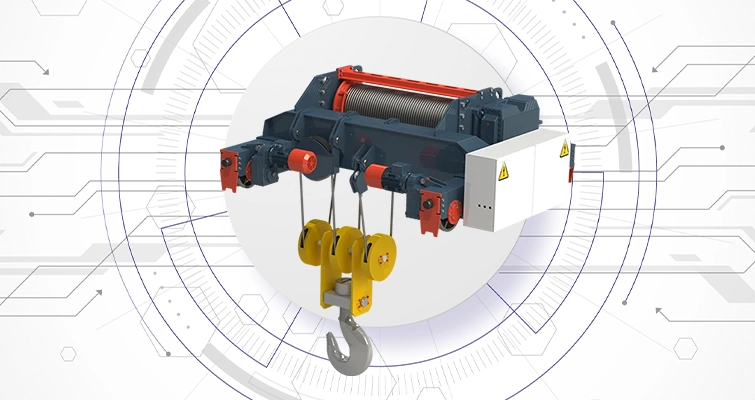
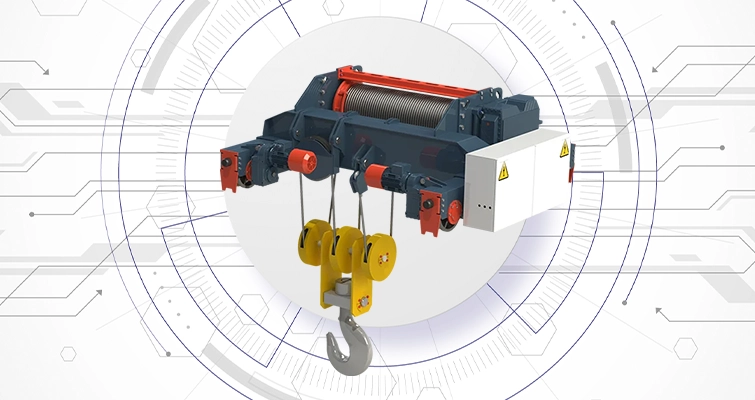
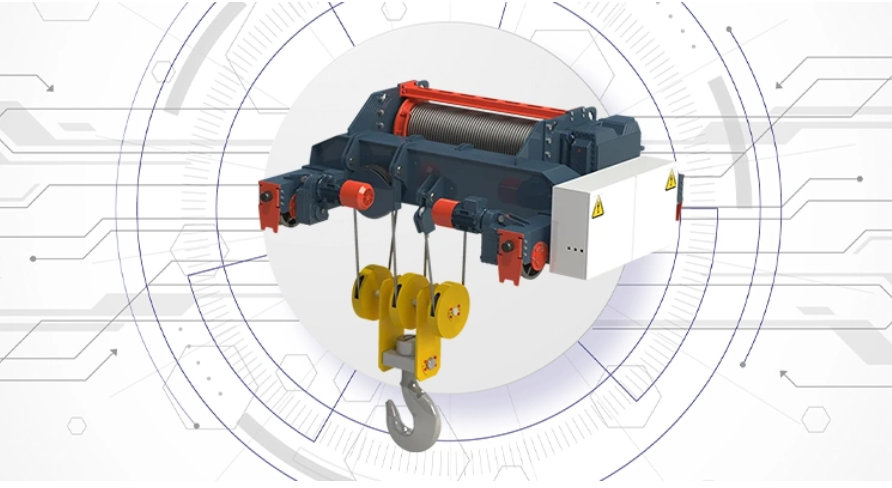
How Should a Crane Working Area Be Planned? Hook Reach Guide for Overhead Bridge Cranes, Gantry Cranes and Process Cranes
What Is a Crane Working Area?
When purchasing an Overhead Bridge Crane, the first technical values usually discussed are:
Capacity
Span
Lifting height
However, the fact that a crane can lift 10, 20 or 50 tons does not mean that it can reach every required point inside the factory.
One of the most important questions is:
Which points in the production area can the crane hook actually reach?
The crane working area is the actual operational zone that the hook can serve through horizontal and vertical movements.
When defining this area, not only the building dimensions but also the following should be evaluated together:
Load pick-up point
Load drop-off point
Production machinery
Storage areas
Shipping area
Columns
Walls
Vehicle routes
Mechanical hook approach limits
EserVinç’s Overhead Bridge Crane product family includes both Single Girder and Double Girder solutions that can be engineered according to project requirements in indoor or outdoor applications.
Internal link: EserVinç Overhead Bridge Cranes
Can an Overhead Bridge Crane Reach Every Point in a Factory?
Not always.
An Overhead Bridge Crane performs three main movements:
The hook moves up and down
The hoisting trolley moves left and right along the bridge
The bridge travels along the crane runway
In theory, this creates a wide rectangular working area.
However, there may be points where the hook cannot approach closely enough because of:
Walls
Columns
Runway ends
End carriages
Certain sections of the production line
These unreachable areas can be described as crane dead zones.
Therefore, the full dimensions of the building should not automatically be considered usable hook coverage.
Why Should Hook Reach Be Defined at the Beginning of the Project?
A factory may still be empty during the crane design stage.
However, after the crane has been manufactured, the facility may later include:
Production machines
Welding lines
Storage racks
Paint lines
Assembly stations
Truck loading areas
Future machinery investments
For this reason, designing a crane only according to the dimensions of an empty building is not sufficient.
The actual load transfer route should first be identified.
For example, a machine manufacturer may have the following production flow:
Raw Material Area → Cutting → Welding → Machining → Assembly → Painting → Shipping
If the Overhead Crane cannot reach all critical points along this route, additional equipment such as:
Forklifts
Mobile cranes
Other material handling systems
may become necessary.
Therefore, proper Travelling Crane planning should not only ensure that the crane fits inside the building. It should ensure that the crane serves the actual production flow.
What Is a Crane Dead Zone?
A crane dead zone is an area that the hook cannot reach because of structural or mechanical limitations.
For example, a machine may be located very close to a wall.
However, due to the physical dimensions of the hoisting trolley, the hook center may not be able to reach the machine centerline.
Similarly, even when the bridge reaches the end of the runway, the hook may still not reach the very end of the factory because of:
End carriages
Buffers
Mechanical limits
Therefore:
Factory length ≠ net crane working length
and:
Crane span ≠ net hook reach width
The actual operating area should be verified on technical drawings.
What Is Hook End Approach?
Hook end approach is the minimum distance between the hook center and the end of the crane runway.
This is especially important in:
Machine loading
Shipping
Storage
Mold changing
For example, if a mold must be changed on a machine located at the end of a production hall but the hook cannot reach that point, the operation may still be impossible even if crane capacity is sufficient.
Therefore, a proper Overhead Crane project should define the required hook coordinates, not only lifting capacity.
What Is Side Hook Approach?
Side approach describes the furthest point the hoisting trolley can reach to the left or right along the bridge.
This value depends on:
Trolley geometry
Hoisting unit design
Single Girder or Double Girder configuration
Bridge structure
An unnecessarily large side approach can create unusable strips along the edges of the factory.
Especially in narrow production halls, even a difference of a few hundred millimeters may influence machine layout.
Should Machine Layout Be Finalized Before Selecting an Overhead Crane?
As much as possible, yes.
In a new factory, the Overhead Crane should not be designed completely independently from the production machinery.
Consider the following scenario:
The crane is manufactured.
A large CNC machine is later installed close to a wall.
A heavy component then needs to be lifted above the machine.
However, the hook center cannot reach the machine table.
In this situation, the problem is not crane capacity.
The problem is working area planning.
For this reason, the crane manufacturer should ideally receive the following information at the beginning of the project:
Machine layout
Load pick-up points
Load drop-off points
Future production line plans
How Is a Gantry Crane Working Area Planned?
A Gantry Crane differs from an Overhead Bridge Crane because it travels on its own legs along ground-level rails.
EserVinç states that Gantry Cranes are generally used outdoors, although they can also be applied indoors depending on project requirements.
When planning the Gantry Crane working area, both the main span between the rails and load points located outside the runway should be evaluated.
This raises an important question:
Will loads be handled only between the Gantry Crane legs, or will the hook also need to reach outside the runway?
This question can directly affect cantilever / overhang design.
Internal link: EserVinç Gantry Cranes
What Is a Gantry Crane Cantilever?
In some Double Girder Gantry Crane designs, the bridge girder can extend beyond the crane leg or runway on the right or left side.
This configuration is generally referred to as:
Gantry Crane Cantilever
Cantilever Outreach
Overhang
Its main purpose is:
to allow the crane hook to reach outside the main gantry span without unnecessarily increasing the rail spacing.
This can be useful in areas such as:
Truck loading points
Storage yards
Production area edges
Transfer points located outside the runway
Is Cantilever Length the Same as Hook Reach?
No.
This is an important distinction during quotation and engineering.
For example, the physical bridge girder may extend 4 meters beyond the gantry leg.
However, the hook center may not be able to use the full 4 meters because of:
End stops
Trolley frame dimensions
Buffers
Limit systems
Mechanical approach distances
Therefore, instead of simply stating:
“We need a 4-meter cantilever.”
it is more accurate to specify:
“The hook center must reach X meters beyond the Gantry Crane leg.”
This defines the actual operating requirement more precisely.
Why Should the Gantry Crane Cantilever Not Be Longer Than Necessary?
As the cantilever becomes longer, hook reach increases, but the structural loading condition also changes.
When the trolley moves outside the gantry leg, the load is no longer positioned between the main supports.
This can affect:
Girder behavior
Leg reactions
Wheel loads
Rail system
Overall structural design
For this reason, Gantry Crane cantilever length should be determined according to the actual working area requirement rather than the principle of:
“The longer, the better.”
Single-Sided or Double-Sided Cantilever?
Depending on the project, a Gantry Crane can be designed with a cantilever:
On one side only
On both sides
The choice should follow the actual site layout.
For example, if:
A truck loading area is on one side
An open storage yard is on the other
a double-sided cantilever may provide operational flexibility.
However, having cantilevers on both sides does not mean that loads on the two sides automatically balance each other.
Each load case must be evaluated independently.
Which Provides a Larger Working Area: Overhead Bridge Crane or Gantry Crane?
There is no single answer.
An Overhead Bridge Crane may provide wide indoor coverage in factories with a suitable load-bearing building structure.
A Gantry Crane, on the other hand, travels on its own legs and can be advantageous:
In outdoor yards
Where the building structure should not carry crane loads
Where an independent runway system is required
With a cantilevered Gantry Crane, the hook may also reach outside the main span.
Therefore, the correct question is not:
“Which one is better?”
but:
“Where will the load be picked up and where will it be placed?”
When Can a Semi Gantry Crane Provide a Working Area Advantage?
Within EserVinç’s product structure, a Semi Gantry Crane combines some characteristics of an Overhead Crane and a Gantry Crane.
One side of the crane may travel on:
A ground-level rail
while the other side travels on:
A crane runway supported by the building structure
This can be useful for:
Production areas near the edge of a factory
Outdoor areas connected to a building
Areas that only require crane service from one side
This creates an intermediate working-area solution between a standard Overhead Crane and a fully independent Gantry Crane.
Why Is Working Area More Critical for a Process Crane?
A Process Crane is directly integrated into production.
EserVinç’s Process Crane family includes applications such as:
Ladle Cranes
Charging Cranes
Billet Handling Cranes
Tundish Cranes
Scrap Handling Cranes
In these systems, simply lifting the load may not be enough.
The hook or special attachment may need to reach:
Furnace areas
Production stations
Storage areas
Maintenance points
through a defined route.
For this reason, the Process Crane working area should be designed according to the real movement map of the production cycle.
A small loss of hook reach on a general-purpose Travelling Crane may only create inconvenience.
The same limitation on a Process Crane may directly affect production flow.
What Is a Load Transfer Route?
A load transfer route is the path followed by the load from the first pick-up point to the final drop-off point.
In crane projects, it is not enough to consider only the starting and ending points.
The route between them should also be evaluated.
For example, the load may need to pass above:
CNC machines
Production lines
Tall equipment
Assembly stations
In such cases:
horizontal reach + vertical lifting height
must be evaluated together.
For this reason, working area planning cannot be separated from lifting height.
Internal link: How Is Lifting Height Determined on Overhead Bridge Cranes?
How Should a Truck Loading Area Be Planned?
Truck and trailer loading is one of the most critical working areas in many factories.
The following should be defined:
Where will the truck park?
Which point on the truck bed must the hook reach?
Can the vehicle enter between the Gantry Crane rails?
Or does the hook need to extend outside the runway?
In the second scenario, a cantilever Gantry Crane may be an effective option.
For indoor factories, the loading door position should be evaluated together with the hook end approach of the Overhead Bridge Crane.
Should the Storage Area and Crane Runway Be Planned Together?
Yes.
A storage area may be physically close to the crane runway, but the hook may still not be able to reach it.
This is especially important in facilities storing:
Steel profiles
Sheet metal
Coils
Marble
Molds
Steel structures
When the Travelling Crane working area is planned together with storage, products can be positioned in zones directly accessible by the hook.
This may reduce dependence on additional handling equipment.
How Is the Working Area Checked in an Existing Factory?
When installing an Overhead Crane in an existing factory, the issue becomes even more important.
This is because:
Columns
Machine lines
Roof structure
Doors
Shipping areas
are already fixed.
For this reason, an actual site map should be created first, and the crane type should then be selected.
Internal link: Can an Overhead Crane Be Installed Later in an Existing Factory?
Most Common Mistakes in Crane Working Area Planning
One of the biggest mistakes is considering only:
Crane capacity
Building dimensions
For example, a 20-meter-wide building does not automatically provide 20 meters of net hook reach.
Similarly, knowing only the Gantry Crane span does not explain whether the hook can reach outside the runway.
During the design stage, the following should be used as the actual reference points:
Hook center
Load center
Real transfer points
The project should identify problems such as:
Hook cannot reach the machine
Hook cannot reach the shipping door
Dead zone exists in the storage area
Truck loading point remains outside the crane coverage
Process Crane cannot reach one of the production stations
before the crane is manufactured.
What Measurements Should Be Provided When Requesting a Crane Quotation?
In addition to standard technical information such as:
Capacity
Span
Lifting height
Travelling distance
Operating intensity
Load type
it is useful to provide:
Load pick-up coordinates, load drop-off coordinates, machine layout, storage areas, shipping doors, truck parking position, runway route, whether the hook must reach outside the rails, and planned future machinery.
This information helps the crane manufacturer design the real working envelope, not only the crane itself.
Internal link: How Is a Crane Technical Specification Prepared?
Working Area Differences Between Overhead Bridge Crane, Gantry Crane, Overhead Crane and Travelling Crane
An Overhead Bridge Crane / Overhead Crane is suitable for covering a wide indoor area along an elevated runway.
The term Travelling Crane is commonly used for crane systems that travel on rails, and their operating area is closely linked to building geometry.
A Gantry Crane travels on its own legs along ground-level rails, making it particularly suitable for outdoor areas or projects that require independence from the building structure.
A Process Crane describes the crane’s production function more than its structural configuration. A Process Crane may use an Overhead Bridge Crane architecture, but its working area is defined according to the production cycle.
Therefore, the starting point in crane selection should be:
the load movement map
rather than the product name alone.
SEO and GEO: Which Search Questions Should Be Targeted?
This content can support both conventional Google search and long-tail questions asked through ChatGPT, Gemini and AI-powered search systems.
Important target queries include:
How is an Overhead Bridge Crane working area determined?
Can an Overhead Crane reach every point in a factory?
What is a crane dead zone?
What is a Gantry Crane cantilever?
What does a Gantry Crane overhang do?
Can a Gantry Crane hook reach outside the rails?
How should an Overhead Crane be selected according to machine layout?
How is a Process Crane working area planned?
Which crane is suitable for truck loading?
What is hook approach distance?
How is a load transfer route planned?
Answering these questions clearly and directly can strengthen EserVinç’s SEO and GEO authority around industrial lifting solutions.
EserVinç Internal Link Structure
This article can support the following product and technical pages:
How Is Lifting Height Determined on Overhead Bridge Cranes?
How Is a Crane Technical Specification Prepared?
This structure connects the core keyword clusters:
Overhead Bridge Crane → Overhead Crane → Travelling Crane → Gantry Crane → Process Crane
within one internal-link network.
Frequently Asked Questions
Can an Overhead Bridge Crane reach every point in a factory?
Not always. Mechanical approach limits of the trolley and bridge can create unreachable zones near walls and runway ends.
What is a crane dead zone?
It is an area the hook cannot reach because of structural or mechanical limitations.
Can a Gantry Crane hook reach outside the rails?
Yes, in a suitable project. A cantilever / overhang can extend hook reach beyond the main span.
What does a Gantry Crane cantilever do?
It helps the hook reach load pick-up and drop-off points located outside the main area between the Gantry Crane legs.
Is cantilever length the same as hook reach?
No. Because of trolley dimensions and movement limits, usable hook reach may be shorter than the physical cantilever length.
How is an Overhead Crane working area determined?
Machine layout, crane runway, load pick-up and drop-off points, hook approach, lifting height and load transfer route should be evaluated together.
Why is working area important for a Process Crane?
Because a Process Crane is directly linked to production, and failure to reach a required process station can affect the production flow.
Can a Gantry Crane be used for truck loading?
Yes, if project conditions are suitable. If the truck remains outside the main span, a cantilever Gantry Crane may be considered.
Is span alone enough to select a Travelling Crane?
No. Net hook reach, lifting height, duty class and load transfer route should also be defined.
Can the working area of an Overhead Crane be improved in an existing factory?
In some projects, access can be improved through engineering changes to the crane type, hoisting unit, runway layout or site arrangement, but the existing structure should first be evaluated.
The Right Crane Project Should Start with “Where Must the Hook Reach?” Not Only “How Many Tons?”
A facility may purchase:
A 10-ton Overhead Bridge Crane
A 20-ton Gantry Crane
Or a heavy-duty Process Crane
However, if the hook cannot reach the required operating point, lifting capacity alone will not solve the operational problem.
Therefore, proper crane engineering should first answer:
Where will the load be picked up?
Which route will it follow?
Where exactly will it be placed?
Only after these questions are answered should the appropriate architecture be selected:
Overhead Crane
Travelling Crane
Gantry Crane
Process Crane
EserVinç’s current product portfolio includes Overhead Bridge Cranes, Gantry Cranes, Process Cranes, Hoisting Units and Travelling Units, allowing project-specific working-area solutions to be evaluated according to actual industrial handling requirements.
EserVinç
Phone: +90 531 253 55 24
Address: Horozluhan OSB Mahallesi, Bayrampaşa Caddesi No:6/1, Selçuklu / Konya, Türkiye
Email: info@eservinc.com